
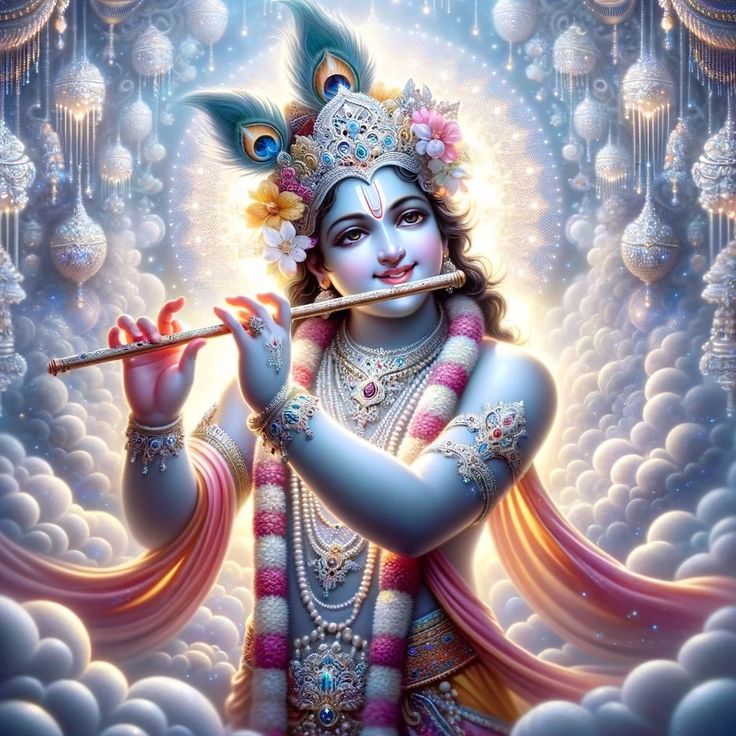
Lord Krishna is one of the most powerful incarnations of Vishnu. He is the 8th avataar, and the most popular of all the Vishnu avataars. Lord Krishna is dark and extremely handsome. The word Krishna literally means ‘black’, and black also signifies mysteriousness. He is the God of protection, compassion and love. A peacock feather is an integral part of his crown. There are many portrayals of Lord Krishna. He is mostly depicted as an infant eating butter or a young boy playing the flute or a cowherd enjoying with his friends. He is shown with Radha who is his pure love. He is also shown blowing the conch and also a charioteer giving guidance to Arjun during the Mahabharata war. The birthday of Krishna is called Janmashtami, a special occasion for Hindus that is celebrated around the world. Krishna’s birth has a famous story. Krishna’s parents- Devaki and Vasudeva were imprisoned by the evil Kansa. Kansa was Devaki’s brother who had imprisoned his own father for the throne. According to a prophecy, Kansa came to know that he will be killed by Devaki’s eight son and hence he imprisoned his own sister and brother-in-law. The evil Kansa killed each of Devaki’s six children. When Devaki was pregnant with the seventh child, the fetus was miraculously transferred to another lady called Rohini in Vrindavan. This child was Balaram and was the Supreme Lord’s miracle. Krishna, the eight child, was born at the stroke of midnight in the jail. As soon as he was born, all the guards fell into deep slumber and the locks opened automatically. Vasudeva carried baby Krishna in a basket and crossed the flooded Yamuna River where the king serpent Adishesha protected baby Krishna from the torrential rains. This is how baby Krishna was miraculously transferred by his father Vasudeva to Gokul at Yashoda and Nand’s house. When Vasudeva reached Nand’s house, he saw that Yashoda had given birth to a baby girl. He picked the girl and returned to his prison, hoping that Kansa would spare the life of a girl and the prophecy had mentioned that Devaki’s eight son would kill him. But Kansa snatched the baby and attempted to kill by throwing her against the wall. Miraculously, the baby girl transformed to Goddess Durga and informed Kansa that Devaki’s eight son was alive and would soon come to kill him. Lord Krishna has 108 names. Some of the popular names are Madhav, Gopal, Hari, Kanha, Keshav, Radhe and Achyuta. He rescued 16000 women from the clutches of the demon Narkasura who had kept them captive and later married them to protect their honour. Hindu Mythology Kaali Hindu Mythology Brahma Hindu Mythology Saraswati Hindu Mythology Vishnu Hindu Mythology Lakshmi Hindu Mythology Shiva Hindu Mythology Parvati Hindu Mythology Ganesha Hindu Mythology Durga Hindu Mythology Indra Hindu Mythology Rama Hindu Mythology Sita Hindu Mythology Hanuman Hindu Mythology Krishna Hindu Mythology Buddha Previous Next
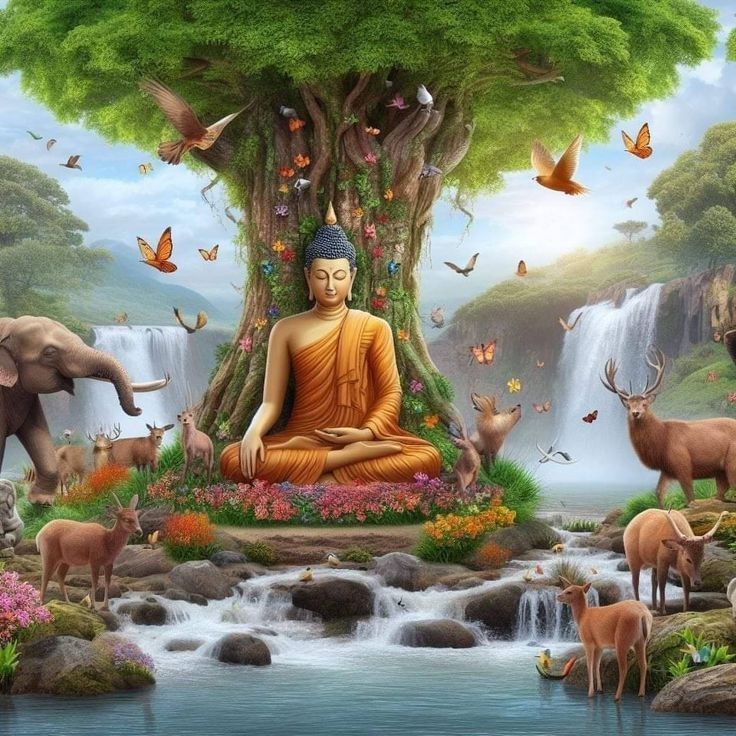
Buddha
Buddha Gautam Buddha or Siddhartha Gautam means ‘the awakened’. He was born in Lumbini, which is now in Nepal, to a royal family.It is believed that Siddhartha Gautam’s mother, Maya Devi conceived him when she dreamt of a white elephant entering her right side. As soon as the prince was born, the holy saints and scholars predicted that he would be a great religious teacher. Hence his father kept him away from the real world to prevent him from becoming an ascetic. Prince Gautam grew up in luxury, not aware of the harsh world outside his palace, until one day, in the streets of Kapilavastu, he encountered a sick man, an old man and a dead man. This is when he realised the real world is different from his world and understood more details from his charioteer. When he returned to his palace, he had made his mind up and that night, he left the palace in search for answers to life’s realities and became a sage. He attained salvation in Bodh Gaya, India. He quit all the worldly pleasures as a prince to lead the life as a monk. He left his wife Yashodhara and his son Rahul in the palace as he did not want them to go through any hardship. It is believed that Yashodhra continued to stay in the palace but lived a lifestyle of a monk and living modestly. It is said that for six years, Lord Buddha along-with his five companions searched for the true meaning of life. His first sermon was at Sarnath. After some years, he was alone in his quest for truth until he attained enlightenment under a Bodhi tree. Lord Buddha founded Buddhism which says that human cycle is a continuous cycle of suffering and birth and only by achieving Nirvana (enlightenment) can one escape this cycle. It believes in the law of Karma. The Jataka stories have the most relevant stories of Buddhist preachings. The Buddha avataar is also said to be one of the Dashaavataars of Lord Vishnu in some mythological texts. Lord Buddha talked of the four truths which was called Arya Satya. This avataar promoted non-violence and was against sacrificing animals in Yagnas. Hindu Mythology Kaali Hindu Mythology Brahma Hindu Mythology Saraswati Hindu Mythology Vishnu Hindu Mythology Lakshmi Hindu Mythology Shiva Hindu Mythology Parvati Hindu Mythology Ganesha Hindu Mythology Durga Hindu Mythology Indra Hindu Mythology Rama Hindu Mythology Sita Hindu Mythology Hanuman Hindu Mythology Krishna Hindu Mythology Buddha Previous Next
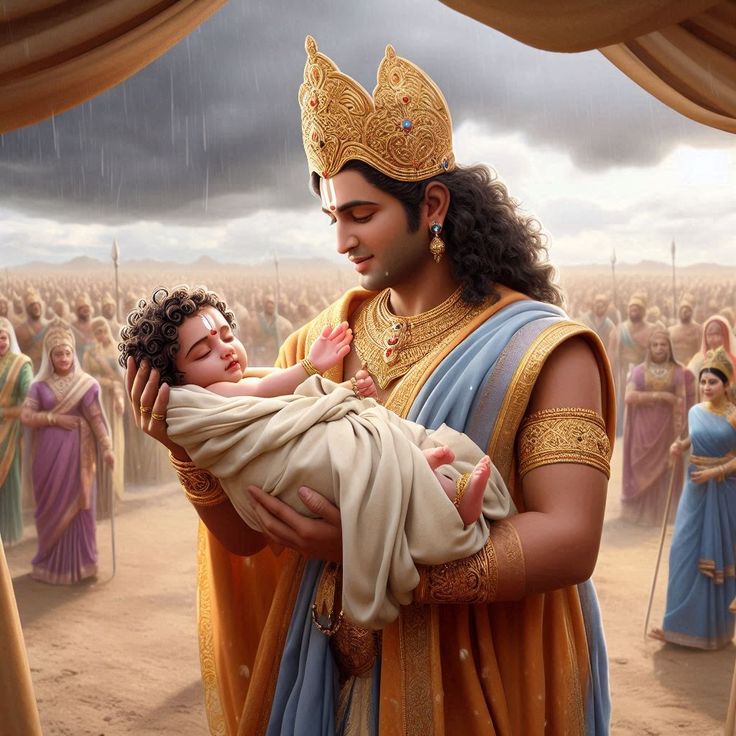
Prince Siddhartha’s birth
Prince Siddhartha’s birth Gautama or Prince Siddhartha was born in the Shakya Kingdom to the head of the clan, King Shuddhodhana and Queen Maya. This warrior kingdom is below the foothills of Himalayas. It is believed that Prince Siddhartha’s mother, Maya Devi conceived him in a very unique way after she had a dream on a full moon night, that a white elephant with six tusks has entered her right side of the womb. When Maya Devi realized that she was pregnant, after a few months, she decided to go to her father’s house. On the way to her maternal home, the queen’s procession passed a garden in Lumbini Park, in Nepal. When they were crossing the garden, she felt labour pains and gave birth to the divine baby boy in a standing position while leaning against a tree in this garden. The birth was truly divine with the Saal trees, scented flowers, birds and bees accompanying. The delivery was painless and the baby boy who emerged from Maya devi’s right side was born in a fully formed avataar. As soon as he was born, the Prince started taking seven steps. Whenever he took a step, a white lotus flower bloomed. Wise sages and saints came to bless the baby prince and predicted that the child was a divine kid and would become a great secular or religious leader. Buddhist Mythology Prince Siddhartha’s birth Buddhist Mythology Prince Siddhartha’s childhood Buddhist Mythology The Prophecy by the Sages Buddhist Mythology The First Sight of the Old Man Buddhist Mythology The Second Sight of the Sick Man Buddhist Mythology The Third Sight of the Dead Man Buddhist Mythology The Fourth Sight of the Monk Buddhist Mythology Gautama’s Renunciation Buddhist Mythology Prince Siddhartha becomes Gautama Buddha Buddhist Mythology The First Five Monks Buddhist Mythology The Story of the Serpent King Buddhist Mythology Angulimala, The Bandit Previous Next
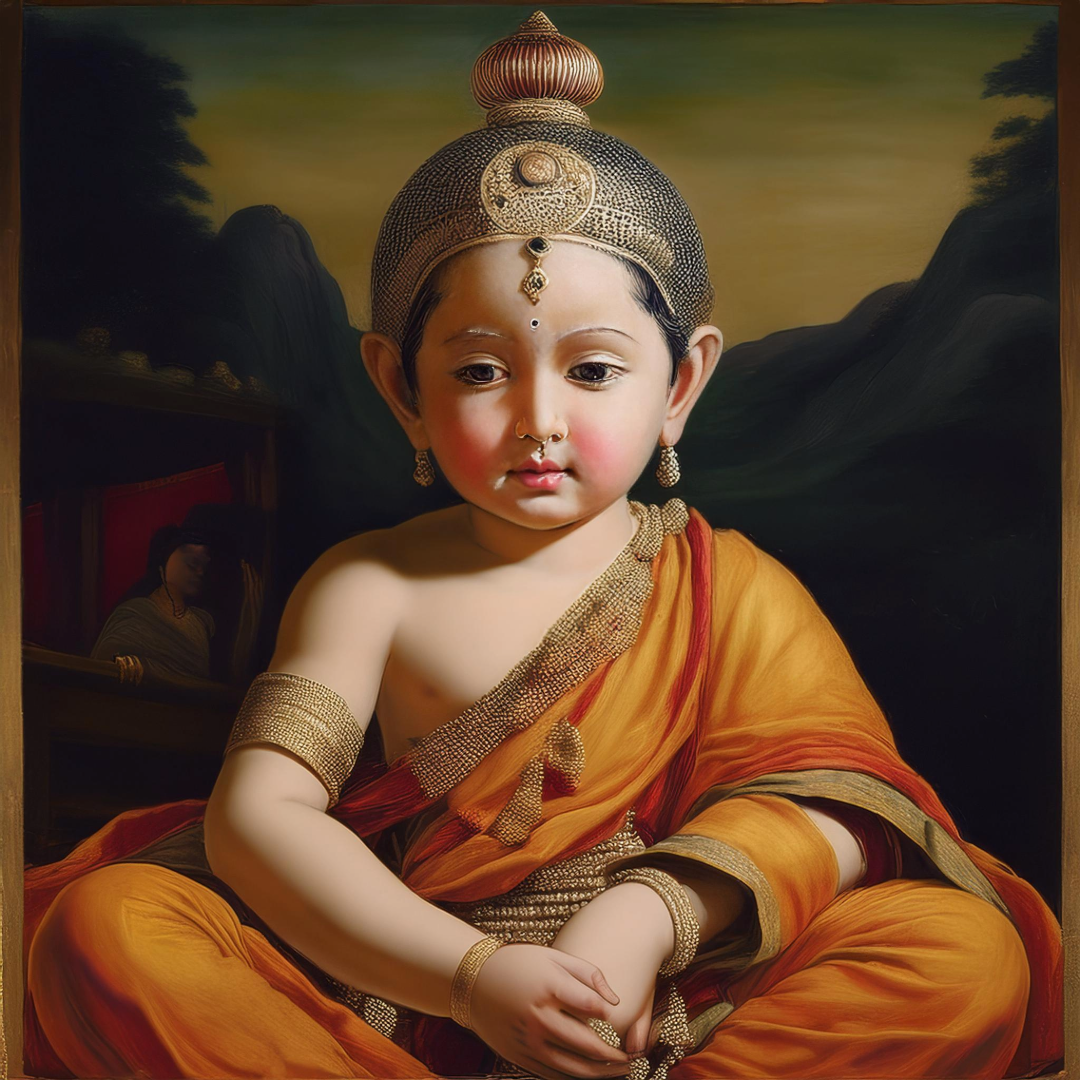
Prince Siddhartha’s childhood
When Prince Siddhartha was seven days old, Queen Maya Devi expired. King Shuddhodana married Maya Devi’s younger sister, Prajapati Gotami who raised Siddhartha as her own son. Prince Siddhartha was sent to school by the King where he studied with children from noble families and learnt not only education-based subjects

The Prophecy by the Sages
The Prophecy by the Sages When Prince Siddhartha was born, King Shuddhodhana had celebrated in a very grand way and has invited everyone for the naming ceremony. Five sages attended the ceremony and they also predicted that it was written in Prince Siddhartha’s destiny that he would become a sage after seeing a sick man, an old man, a dead body and a monk. They warned the King that his son would leave all the worldly pleasures to seek salvation. This warning got the King worried. To add to his worries, Queen Maya Devi expired when Prince Siddhartha was just an infant. The King decided to shield his son and hence built a big palace and ensured that his son would never leave the palace and hence would not see the sick man, the old man, the dead body and the monk. He ensured that the palace had all the worldly pleasures and had many servants who would protect the Prince. Every person that the Prince would interact with was healthy and young. The King did not allow any saints or monks to meet the Prince. To prevent Prince Siddhartha from boredom, he also built three different palaces for him- first one for summer, second one for the rains and third one for winter season. Parks, lakes, forests, hunting ground were all built inside the palace fortress. When Prince Siddhartha became sixteen years old, he got married to a beautiful princess, Yashodhara. Inside the palace, the prince and his wife led a life of luxury. Buddhist Mythology Prince Siddhartha’s birth Buddhist Mythology Prince Siddhartha’s childhood Buddhist Mythology The Prophecy by the Sages Buddhist Mythology The First Sight of the Old Man Buddhist Mythology The Second Sight of the Sick Man Buddhist Mythology The Third Sight of the Dead Man Buddhist Mythology The Fourth Sight of the Monk Buddhist Mythology Gautama’s Renunciation Buddhist Mythology Prince Siddhartha becomes Gautama Buddha Buddhist Mythology The First Five Monks Buddhist Mythology The Story of the Serpent King Buddhist Mythology Angulimala, The Bandit Previous Next
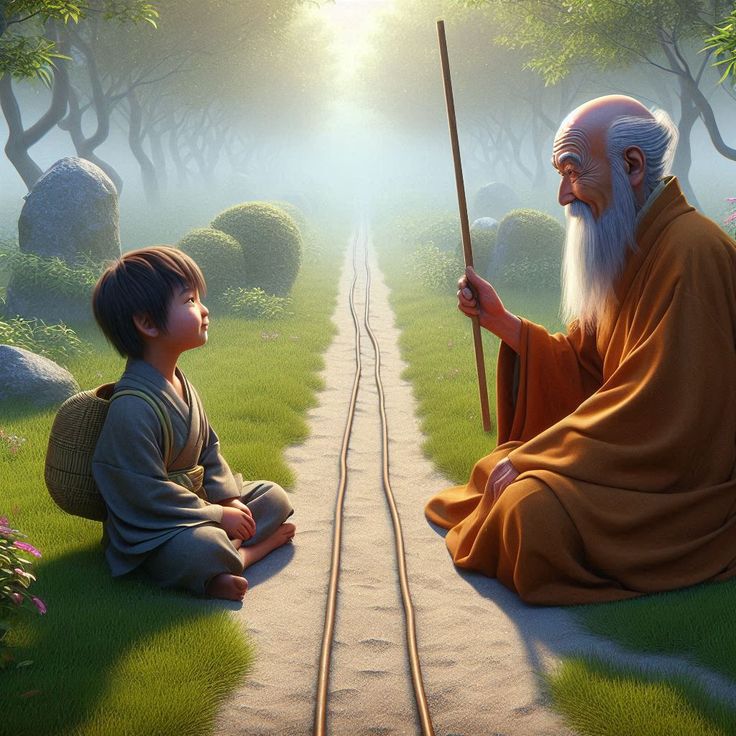
The First Sight of the Old Man
The First Sight of the Old Man To avoid the prophecy of the sages from coming true, King Shuddhodhana had tried to keep his son, Prince Siddhartha in captivity and gave him all the worldly pleasures and happiness within the four walls of the palaces. But despite all the pleasures, Prince Siddhartha was not happy. One day, he requested his father to allow him to go outside and explore. The King ordered all the people to decorate their homes and welcome the Prince with happiness. As the Prince was travelling, he came across an old hut and saw an old beggar who was very weak and wearing torn and dirty clothes. The old man could barely walk and he had no teeth in his mouth and was partially blind. While he was walking slowly with the help of a stick, it was evident that he did not have any strength in him. The old man was so hungry that he had no option but to beg to the people for a small morsel of food. The Prince was confused at this sight as he had never seen an old person and had never seen anyone in tattered clothes. He asked his charioteer and loyal servant, Channa to explain and that is when he understood that the cycle of life makes all young people become old someday. Old age cannot be stopped or altered if one lives on. The Prince realized that old age was a common phenomenon, where the body becomes weak and frail and this thought made him very sad. He went back to the palace with a heavy heart and confused thoughts in his mind. Buddhist Mythology Prince Siddhartha’s birth Buddhist Mythology Prince Siddhartha’s childhood Buddhist Mythology Gautama’s Renunciation Buddhist Mythology The Prophecy by the Sages Buddhist Mythology The First Sight of the Old Man Buddhist Mythology The Second Sight of the Sick Man Buddhist Mythology The Third Sight of the Dead Man Buddhist Mythology The Fourth Sight of the Monk Buddhist Mythology Prince Siddhartha becomes Gautama Buddha Buddhist Mythology The First Five Monks Buddhist Mythology The Story of the Serpent King Buddhist Mythology Angulimala, The Bandit Previous Next
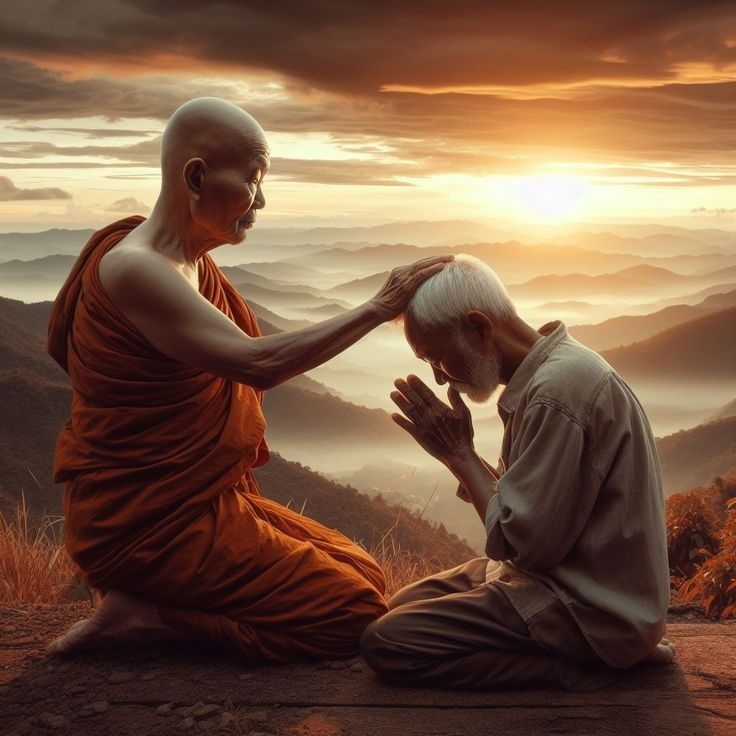
The Second Sight of the Sick Man
The Second Sight of the Sick Man After the first sight of old age, Prince Siddhartha wanted to experience the real world for some more days. He requested his father to allow him to visit the capital city. The King unwillingly allowed him to visit the city for the second time. This time, the king did not forewarn the people and thought that it would be best if Prince Siddhartha gets to know the reality. The Prince and his charioteer, Channa walked in disguise on the streets. The Prince saw simple people, usual shops, people doing their daily work. While they were walking, they saw a man who was crying in pain holding his stomach. His face had gotten blue and he was gasping for breath. This was the second sight that made the Prince very sad. Being a kindhearted person, the Prince could not bear the agony of the sick person and he ran towards him to help him. After giving him some water, the Prince got up and asked Channa what was happening to this person. That is when he came to know that the man had plague and his face and body was blue because of the illness and the poison that was running in his blood. The Prince also came to know that there are many illnesses in the world and for most of them, people suffer till they die. This knowledge saddened the prince even further and returned in a very depressed state back to his Palace. The King saw the sad Prince and got very worried. Buddhist Mythology Prince Siddhartha’s birth Buddhist Mythology Prince Siddhartha’s childhood Buddhist Mythology The Prophecy by the Sages Buddhist Mythology The First Sight of the Old Man Buddhist Mythology The Second Sight of the Sick Man Buddhist Mythology The Third Sight of the Dead Man Buddhist Mythology The Fourth Sight of the Monk Buddhist Mythology Gautama’s Renunciation Buddhist Mythology Prince Siddhartha becomes Gautama Buddha Buddhist Mythology The First Five Monks Buddhist Mythology The Story of the Serpent King Buddhist Mythology Angulimala, The Bandit Previous Next
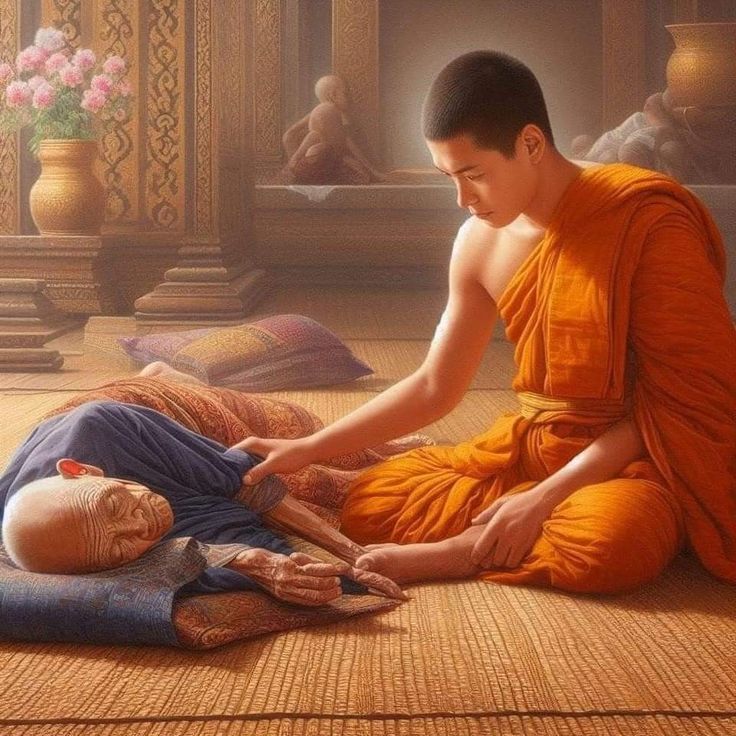
The Third Sight of the Dead Man
The Third Sight of the Dead Man After the second sight of sickness, Prince Siddhartha wanted to explore more and understand the ways of the world. He requested his father, King Shuddhodhana to allow him to visit the kingdom one more time. The King did not have any option and so allowed the request and asked Channa, the charioteer to accompany Prince Siddhartha. Prince Siddhartha disguised himself as a common man and roamed the different lanes of their Kingdom. He kept observing people and learning about their daily life and occupations. When he entered one lane, he saw a big crowd of people who had assembled together. The crowd looked dejected and many people were crying. Prince Siddhartha wondered what the issue was. That is when he saw four men carrying a wooden plank. On the plank, there was a very thin who was lying still. The man was not moving at all and the four men were lifting him and taking the man on the plank somewhere. Siddhartha followed the crowd and kept observing the man on the plank who did not move an inch and did not say anything too. At one point, the crowd stopped walking and the four men put the plank on the ground. They then lifted the man and put him down on a pile of wood which was then set on fire. Despite the fire and the flames, the man on the wooden plank did not move at all. Eventually the entire body was burnt, but Prince Siddhartha did not hear a word of pain. Surprised and confused, he asked his loyal servant, Channa what this entire episode was about. Channa explained about death. Prince Siddhartha learnt that all living beings, including Kings and Queens, are meant to die someday and that death cannot be avoided. Prince Siddhartha was shocked and sad to hear that everyone who is born meets with death. After witnessing this horrific sight, the prince returned to his Palace but couldn’t sleep the entire night. The visions troubled him. Buddhist Mythology Prince Siddhartha’s birth Buddhist Mythology Prince Siddhartha’s childhood Buddhist Mythology The Prophecy by the Sages Buddhist Mythology The First Sight of the Old Man Buddhist Mythology The Second Sight of the Sick Man Buddhist Mythology The Third Sight of the Dead Man Buddhist Mythology The Fourth Sight of the Monk Buddhist Mythology Gautama’s Renunciation Buddhist Mythology Prince Siddhartha becomes Gautama Buddha Buddhist Mythology The First Five Monks Buddhist Mythology The Story of the Serpent King Buddhist Mythology Angulimala, The Bandit Previous Next
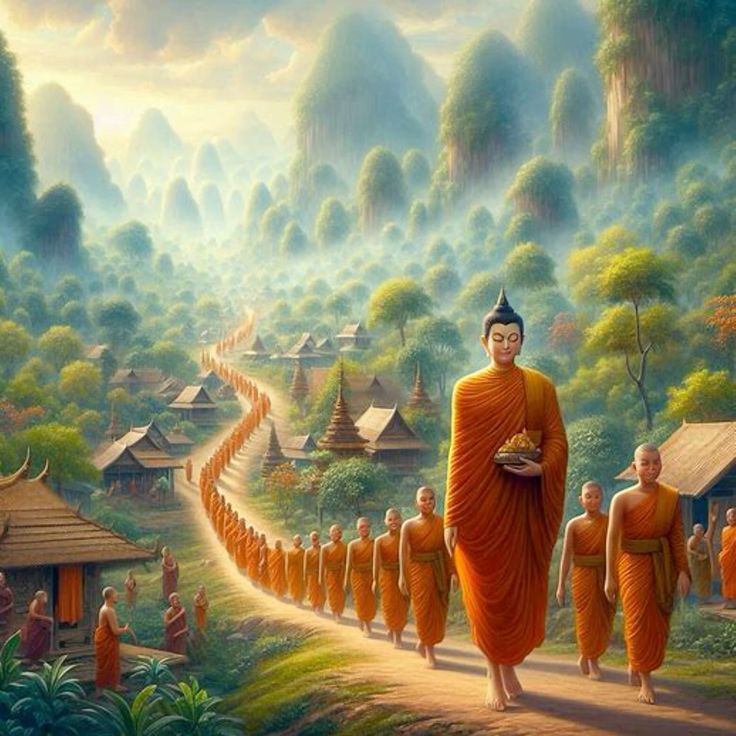
The Fourth Sight of the Monk
The Fourth Sight of the Monk After the three sights, Prince Siddhartha spent a few days in his Palace and was lost in serious thoughts. He then decided to go to the city one more time and informed his father. While passing through the city, he saw a contended man walking down the street. The man had a smile on his face and was wearing an orange-coloured robe. The man’s head was clean shaven. Prince Siddhartha decided to follow him. The man walked in a peaceful stride and went from one house to another and got food and other alms from the residents. This sight was unique and unusual for the Prince. He asked Channa, his faithful charioteer for explanation and came to know that this person was a monk who lives in a monastery. His main goal is to worship God and the monks are always happy and contended as they are always close to God. The Prince was happy to hear this and he got motivated to become someone like the monk as he couldn’t forget the contended look on the monk’s face. The other three sights also came to his mind at the same time and that is when it dawned to Prince Siddhartha that to achieve happiness and peace, it was important to leave the life of pleasure and lead a life which has a quest for salvation and enlightenment. Buddhist Mythology Prince Siddhartha’s birth Buddhist Mythology Prince Siddhartha’s childhood Buddhist Mythology The Prophecy by the Sages Buddhist Mythology The First Sight of the Old Man Buddhist Mythology The Second Sight of the Sick Man Buddhist Mythology The Third Sight of the Dead Man Buddhist Mythology The Fourth Sight of the Monk Buddhist Mythology Gautama’s Renunciation Buddhist Mythology Prince Siddhartha becomes Gautam Buddha Buddhist Mythology The First Five Monks Buddhist Mythology The Story of the Serpent King Buddhist Mythology Angulimala, The Bandit Previous Next
Gautama’s Renunciation
Gautama’s Renunciation Prince Siddhartha and Yashodhara were blessed with a baby boy who was named Rahul. King Shuddhodhana was delighted to have a grandson and he invited the best artists and had the best food for everyone. The King thought all this abundance and celebration would distract Prince Siddhartha from his misery after his four sightings of the old man, sick man, dead man and the monk. The legend says that Prince Siddhartha attended the celebration only out of respect for his father, but eventually fell asleep as his mind was pre-occupied. By the time the celebration was over, Prince Siddhartha had made his mind up to leave all these luxurious pleasure and wealthy life and become a monk or a sage. Once the celebrations were over, Prince Siddhartha went to see his new-born son and wife. As Queen Yashodhara had her hand on the baby, he did not even cuddle the baby as he feared waking his wife who could prevent him from leaving. Quietly, he left the palace at midnight and took his favourite white horse, Kanthak and his faithful servant, Channa. He also took his sword and cut his long hair, wore clothes that are worn by monks, took a bowl for alms and took a last look at his city, Kapilavatthu and rode away. He removed his jewellery and princely clothes and gave everything to Channa so that he could return to the king. He then asked Channa to go back with Kanthak as he did not want Channa to go through the hardships. It is also said that his faithful horse Kanthak died once his master left him. Buddhist Mythology Prince Siddhartha’s birth Buddhist Mythology Prince Siddhartha’s childhood Buddhist Mythology The Prophecy by the Sages Buddhist Mythology The First Sight of the Old Man Buddhist Mythology The Second Sight of the Sick Man Buddhist Mythology The Third Sight of the Dead Man Buddhist Mythology The Fourth Sight of the Monk Buddhist Mythology Prince Siddhartha becomes Gautama Buddha Buddhist Mythology The First Five Monks Buddhist Mythology The Story of the Serpent King Buddhist Mythology Angulimala, The Bandit Previous Next