
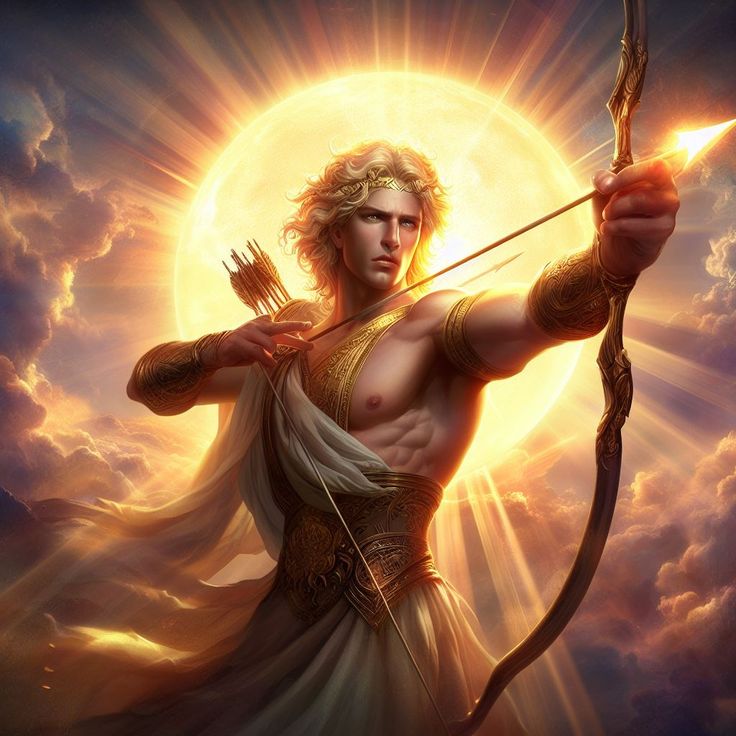
Apollo Apollo is one of the famous Greek Gods in Greek mythology. He is the Sun God who is associated with healing, music, art, poetry, archery, reason, knowledge, truth and prophecy. He is usually depicted as a handsome, beardless youth with long hair. He always has a wreath and branch of laurel. He has a bow and quiver of arrows and is always accompanied by his raven. His symbols include the lyre and his sacred animals are the dolphin and swan. Apollo is believed to be a skilled musician and is said to delight all Olympian Gods with his heavenly tunes. His golden lyre was made by Hermes. He is also known for being adventurous, and indulged in snake wrestling and very tough archery sports. Apollo is the son of Zeus and his mistress Leto. His birth has an interesting myth. When Goddess Hera, the wife of Zeus found about Leto’s pregnancy, she sent a python to kill Leto and her unborn child. Due to this, Leto escaped to an island and after 9 days of pain delivered twins- Apollo and Artemis. It is also said that, within a few days of his birth, Apollo hunted and killed the python who was sent to kill his mother. The python’s mother was Goddess Gaea who complained to Zeus, and Apollo was banished for 9 years and sent to Earth to live amongst the mortals. Daphne, a Naiad nymph who was also the daughter of a river God was famous for having Apollo fall in love with her. However, Daphne wanted to remain unmarried for the rest of her life. According to Greek Mythology, Apollo had been teasing Eros, the God of love. In order to take revenge, Eros fired 2 arrows; a gold arrow that struck Apollo and made him fall in love with Daphne and a lead arrow which struck Daphne and made her hate Apollo. Under the spell, Apollo continued to follow and pursue Daphne but Daphne continued to reject him. Daphne asked the River God Peneus, who was also her father, for help. Peneus turned her into a laurel tree. Apollo made the laurel tree’s leaves evergreen by using his powers of youth. Apollo is most famously known for his contribution in the Trojan war. Achilles had murdered Troilus, Apollo’s dear son and this had angered Apollo a lot. In the Trojan war, Apollo was fighting on the side of the Trojans and when Achilles was hit, Apollo took advantage of the situation and used his archery mastery and fired his arrow into Achille’s weak heel and killed him. Greek Mythology Zeus Greek Mythology Hera Greek Mythology Aphrodite Greek Mythology Ares Greek Mythology Hephaestus Greek Mythology Poseidon Greek Mythology Hermes Greek Mythology Artemis Greek Mythology Athena Greek Mythology Hades Greek Mythology Demeter Previous Next
Matsya Avataar
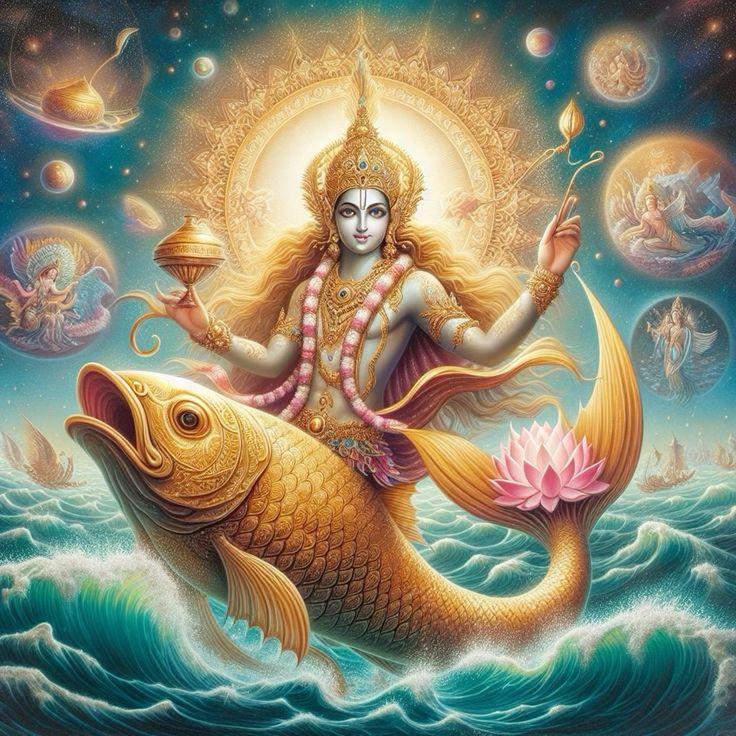
Matsya Avataar The Matsya Avataar is the first of the ten primary avataars (Dashaavataar) of Lord Vishnu. According to Hindu mythology, Lord Vishnu incarnates in various forms to restore cosmic order and protect ‘dharma’ (righteousness). The Matsya Avataar, depicted as a giant fish, symbolizes the beginning of this divine intervention. According to various texts in Hindu mythology, the story begins with King Satyavrata, a pious and devoted king, who was performing his daily rituals by the river. As he scooped water up to offer to the gods, he noticed a talking fish in his palms. The fish requested protection from the larger creatures in the pond. The compassionate ruler placed the fish in a small pot of water. The fish grew rapidly, outgrowing the pot. Satyavrata then transferred the fish to a larger container, but it continued to grow. The king moved it to a lake, and finally, to the ocean, where the fish assumed a gigantic form. The fish then revealed itself to be Lord Vishnu himself. King Satyavrata was filled with awe. Lord Vishnu warned King Satyavrata about a flood that would destroy all life on Earth. He instructed the ruler to build a large boat and gather the seven great sages, seeds of all plants, and one of each species of animals to accompany him on his journey. When the flood waters rose, Lord Vishnu reappeared in the form of the enormous fish. The boat was tied to the fish’s horn, using the great serpent Vasuki as a rope. The fish, known as Matsya, guided the boat through the waters for many days and nights. When the flood finally subsided, Matsya led the boat to a safe place atop the mountains. King Satyavrata and the great sages then repopulated the world, using the seeds and the animals they had rescued, which ensured the continuation of life on Earth. Dashavataar Matsya Avataar Dashavataar Kurma Avataar Dashavataar Varaha Avataar Dashavataar Narasimha Avataar Dashavataar Vaman Avataar Dashavataar Rama Avataar Dashavataar Krishna Avataar Dashavataar Sugata Buddha Avataar Dashavataar Parshurama Avataar Dashavataar Kalki Avataar Previous Next
Kurma Avataar
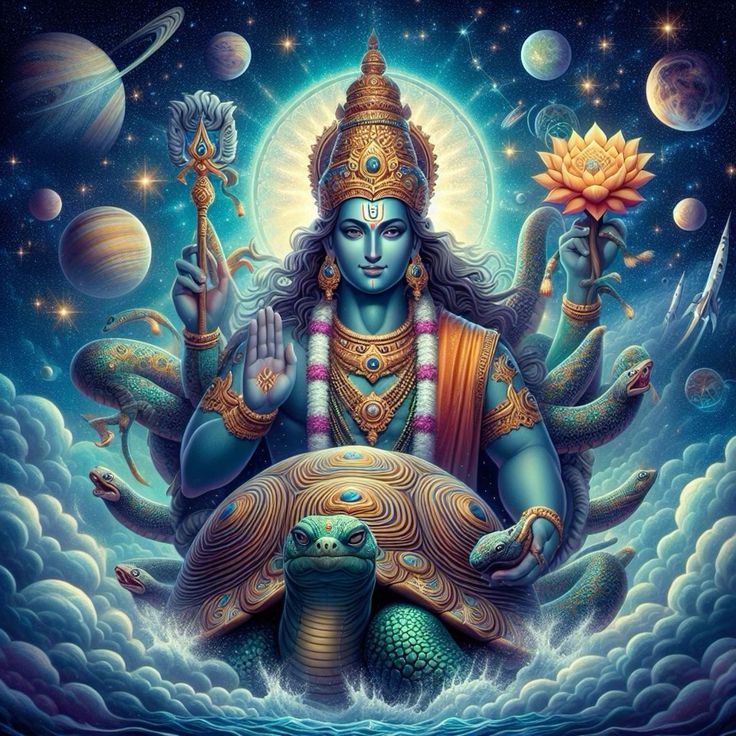
Kurma Avataar The Kurma Avataar is the second of the ten primary avataars (Dashavataar) of the Hindu god Vishnu. This avataar takes the form of a giant tortoise and is central to the legend of the churning of the ocean (Samudra Manthan), a significant event in Hindu mythology that explains the origin of Amrita, the nectar of immortality. The story begins with a conflict between the Devas (Gods) and the Asuras (demons). Both groups desired immortality and eternal power, which could only be achieved by consuming Amrita, the nectar of immortality. To obtain this nectar, they needed to churn the cosmic ocean of milk (Kshira Sagara). Mount Mandara was chosen as the churning rod, and the great serpent Vasuki was used as the churning rope. The Devas and Asuras agreed to work together, with the Devas taking the tail end of Vasuki and the Asuras taking the head. However, when they tried to churn the ocean, Mount Mandara began to sink due to its enormous weight. To save the situation, Vishnu incarnated as Kurma, a giant tortoise. He dove into the ocean and supported Mount Mandara on his back, providing the stability needed for the churning process to continue. With Kurma’s help, the Devas and Asuras resumed churning the ocean. As they did so, various treasures and beings emerged from the ocean, such as Kamadhenu, the wish-fulfilling cow. Airavata, the celestial elephant, Kalpavriksha, the wish-fulfilling tree, Lakshmi, the Goddess of wealth, who became Vishnu’s consort and Halahala, the deadly poison, which Shiva consumed to protect the universe, turning his throat blue (earning him the name Neelakantha). A fierce battle ensued between the Devas and Asuras for the possession of the nectar. Vishnu, taking the form of Mohini, a beautiful enchantress, intervened. She tricked the Asuras into handing over the nectar, which she then distributed among the Devas. Thus, the Devas gained immortality and power over the Asuras. Dashavataar Kalki Avataar Dashavataar Sugata Buddha Avataar Dashavataar Krishna Avataar Dashavataar Rama Avataar Dashavataar Parshurama Avataar Dashavataar Vaman Avataar Dashavataar Narasimha Avataar Dashavataar Varaha Avataar Dashavataar Kurma Avataar Dashavataar Matsya Avataar Previous Next
Varaha Avataar
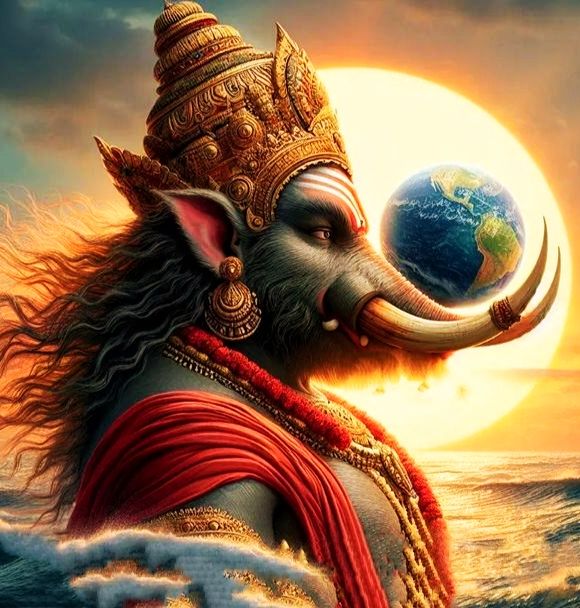
Varaha Avataar The Varaha avataar is the third of the ten dashaavataars of Lord Vishnu. In this avataar, Lord Vishnu takes the shape of a big boar to kill the demon Hiranyakashya and thus save Mother Earth. The avataar is unique as Lord Vishnu assumes a half-animal, half-man form where the head is of a boar and the body is of a human. The legend around the Varaha avataar talks about how the arrogant demon king Hiranyakashya submerged Mother Earth into the ocean and caused havoc in the Universe. Hiranyakashya had received a powerful boon from Lord Brahma that no being, divine or mortal would be able to kill him. This feeling of immortality and invincibility, made Hiranyakashya more evil and he started troubling the Gods and even attacked the Dev-Lok. The Gods had to flee from their abodes and run away from Hiranyakashya’s tortures. After attacking the Gods, the demon’s arrogance increased further. He now turned his attention to Mother Earth or Bhoomi Devi and kidnapped her. This caused total chaos in the universe. To ensure that no one is able to find her, he submerged Mother Earth into the depths of the ocean of the Patal Lok (land of the Asuras). Having left with no option, the Gods pleaded to Lord Vishnu to save the Earth. There is another legend with says Lord Brahma requested Lord Vishnu to kill the demon Hiranyakashya and started meditating. Slowly a tiny piglet emerged from his nostril which was Lord Vishnu himself. This tiny piglet started growing in size until it reached the size as large as a mountain. This was Lord Vishnu’s Varaha avataar which rescued Mother Earth using his celestial tusks. It is said that in his Varaha avataar, Lord Vishnu plunged into the deep depths of the oceans to search for another Earth. He thrust his mighty tusks into the ocean waters, and lifted Mother Earth with his own tusks and swam to the shore and rescued her. On his way up, he also fought with the demon Hiranyakashya and slayed him with his tusks. The fight was fierce and it is said that this fight went on for thousand years before the demon was killed. After Hiranyakashya’s death, the chaos that was caused came to an end and normal balance was restored. Dashavataar Matsya Avataar Dashavataar Kurma Avataar Dashavataar Varaha Avataar Dashavataar Narasimha Avataar Dashavataar Vaman Avataar Dashavataar Rama Avataar Dashavataar Krishna Avataar Dashavataar Sugata Buddha Avataar Dashavataar Parshurama Avataar Dashavataar Kalki Avataar Previous Next
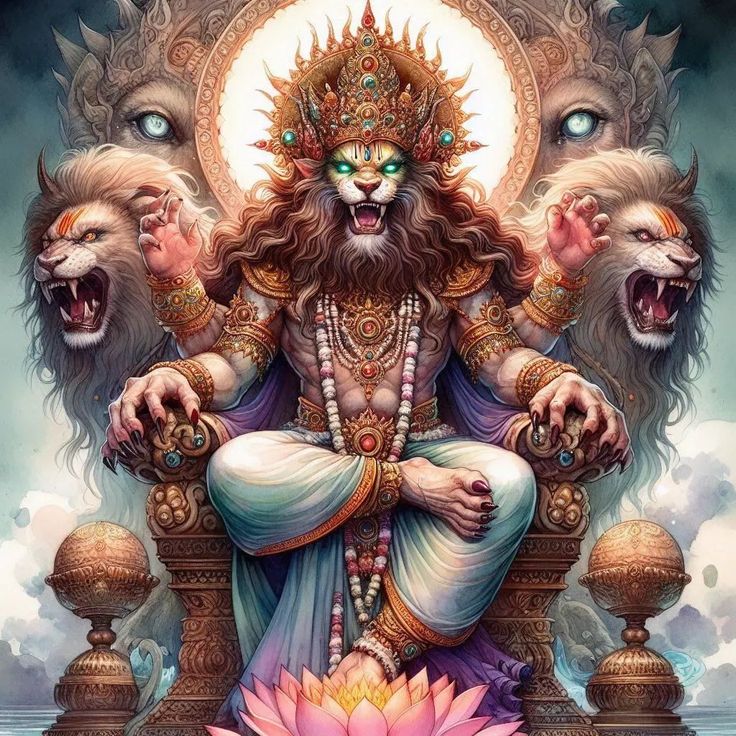
Narasimha Avataar
Narasimha Avataar The Narasimha avataar is the fourth dashaavataar of Lord Vishnu and is believed to be the most ferocious avataar from his ten avataars. Just like the Varaha avataar, even in this avataar, Lord Vishnu assumes a hybrid form of half man and half beast. In the Narasimha avataar, Lord Vishnu has the head of a lion and the body of a human. The mythological story around Lord Vishnu’s Narasimha avataar starts with the birth of two demon sons- Hiranyakashya and Hiranyakashipu to Sage Kashyap and his wife Diti. These two sons were evil and destructive in nature and had been granted boons by Lord Brahma which made them very powerful. The power added to their arrogance, greed and evil. Hiranyakashya aspired to rule all the three worlds: heaven, earth, and the underworld. He became the king of the underworld and then started his quest for ruling the other two worlds. It is said that initially he had asked Lord Brahma to grant him the boon of immortality, but when he was refused, he requested for a boon where he could not be killed by a man or a beast, either during the day or night, nor inside or outside, and no weapon could kill him. This born was closest to becoming nearly invincible which was granted to him by Lord BRamaha. After being granted the boon, Hiranyakashipu started forcing everyone to worship him as God and killed everyone who would not do so. He was not ready to even spare his son, Prahlad who was a devotee of Lord Vishnu. Hiranyakashipu used to get very upset at Prahlad’s devotion and tried to kill him many times by getting poisonous snakes to bite him, throwing him off mountains etc, but no harm came to Prahlad who continued to pray to Lord Vishnu. Hiranyakashipu’s tryranny also started increasing. Once when he asked Prahlad to show him where his favourite God was, Prahlad answered that Lord Vishnu was everywhere. This enraged Hiranyakashipu and asked him if the Lord was in the pillar in their room. Prahlad said yes and the enraged demon broke open the pillar with his mace. From the pillar emerged Lord Vishnu in his Narasimha avataar. This was a half-man, half-lion avataar. The time was during twilight which is neither day nor night. Narasimha placed Hiranyakashipu on his lap so that it was neither land nor air and he used his claws to kill the demon king. This unique incarnation of Lord Vishnu shows how the divine force will always protect the devotees. Dashavataar Kalki Avataar Dashavataar Sugata Buddha Avataar Dashavataar Krishna Avataar Dashavataar Rama Avataar Dashavataar Parshurama Avataar Dashavataar Vaman Avataar Dashavataar Narasimha Avataar Dashavataar Varaha Avataar Dashavataar Kurma Avataar Dashavataar Matsya Avataar Previous Next

Vaman Avataar
Vaman Avataar The Vaman avataar is the fifth dashaavataar of Lord Vishnu. Vaman is the young Hindu Brahmin avataar and dwarf incarnation of Lord Vishnu to defeat the Asura (demon) King Mahabali who was the grandson of Lord Vishnu’s great devotee Prahlad. This avataar was assumed to crush Mahabali’s arrogance and tyranny and build a balance of justice and righteousness on earth. It is believed that when Mahabali sought advice from the Asura Guru Rishi Shukrcharya on how he could build his powers, he was advised to perform a yagna. Once the yagna was completed, King Mahabali was gifted with a golden chariot where the horses ran like the wind. He was also gifted with a divine armour, divine arrows, a divine conch and a divine garland. With these new gifts, Mahabali felt very powerful and fought with Lord Indra and emerged victorious. With this victory, Mahabali now wanted to gather more wealth and hence performed another yagna. During this time, Lord Indra reached out to Lord Vishnu for help to kill Mahabali and give him back the heavens. Lord Vishnu took birth as Mata Aditi’s son. Mata Aditi is known as Lord Indra’s mother too. Mata Aditi named this son, Vaman who then disguised himself as a Brahmin and went to meet Mahabali during his yagna. At the yagna, Mahabali asked all Brahmins what they wished for. That is when the witty Vaman asked to own the land space covered by his three steps. The request seemed ridiculous to the Asuras as well as to the demon king who did not know the reality and agreed to the wish. That is when Vaman started growing in size to such an extent that in his first step, he covered the entire earth. In his second step, he covered the entire sky. Now there was nothing left to be covered in the third step. Though King Mahabali was a demon, he was true to his word and he requested Vaman that he can put the third step on his head. This devotion and truthful behaviour pleased Lord Vishnu, who appeared in his true avataar and blessed Mahabali and granted him the permission to rule Pataal Lok. Once Mahabali went to Pataal Lok, Lord Indra and the other Gods returned to their heavens. Dashavataar Kalki Avataar Dashavataar Sugata Buddha Avataar Dashavataar Krishna Avataar Dashavataar Rama Avataar Dashavataar Parshurama Avataar Dashavataar Vaman Avataar Dashavataar Narasimha Avataar Dashavataar Varaha Avataar Dashavataar Kurma Avataar Dashavataar Matsya Avataar Previous Next
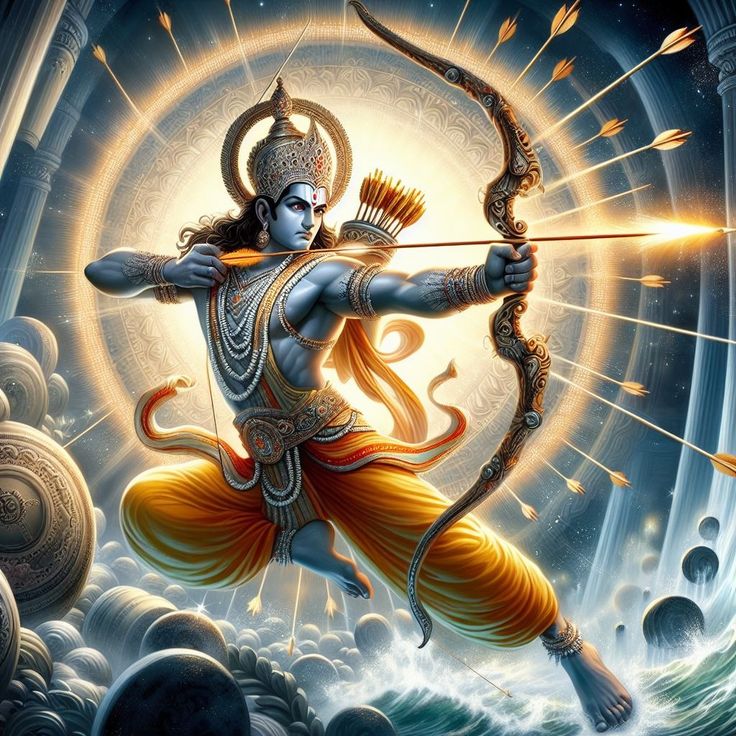
Rama Avataar
Rama Avtaar Rama avataar is the seventh dashaavataar of Lord Vishnu. The epic Ramayan is based on Lord Rama’s life. Lord Rama was also known as Maryada Purushottam which means idea man. He is an example of complete dedication to one’s duties and is also regarded for his love towards the family. Even though he was the most favourite son of King Dasharath, and the rightful heir to the throne of the kingdom of Ayodhya, Lord Rama willingly agreed to go for vanvaas (exile) into the forest and lead the life of an ascetic for 14 years and renounce his princely pleasures after his jealous step-mother queen Kaikeyi plotted to throw him away so that she could give her own son Bharat the crown of Ayodhya. His battle with the demon King Ravana to save his dear wife Sita is one of the famous battles of all times where Lord Rama built a bridge of stones to cross over the vast ocean and reach Lanka, the place where Ravana resided and had hidden Sita. When one talks of Lord Rama, his most faithful brother Lakshmana is also mentioned. Lakshmana accompanied Rama and Sita to the forest and stayed with them for 14 years during their exile. The other mention is always of Lord Hanuman who is the biggest devotee of Lord Rama. In the epic Ramayana, there are many tales of valour of Lord Hanuman and how he helped Lord Rama to defeat Ravana. It is said that the demon King of Lanka, Ravana had become a terror after he got a boon from Lord Shiva that he could not be killed by the hands of a deity, demon or a demigod. Like other dashaavataars, even this avataar of Lord Vishnu emerged as Lord Rama to fight against the evil. Dashavataar Kalki Avataar Dashavataar Sugata Buddha Avataar Dashavataar Krishna Avataar Dashavataar Rama Avataar Dashavataar Parshurama Avataar Dashavataar Vaman Avataar Dashavataar Narasimha Avataar Dashavataar Varaha Avataar Dashavataar Kurma Avataar Dashavataar Matsya Avataar Previous Next
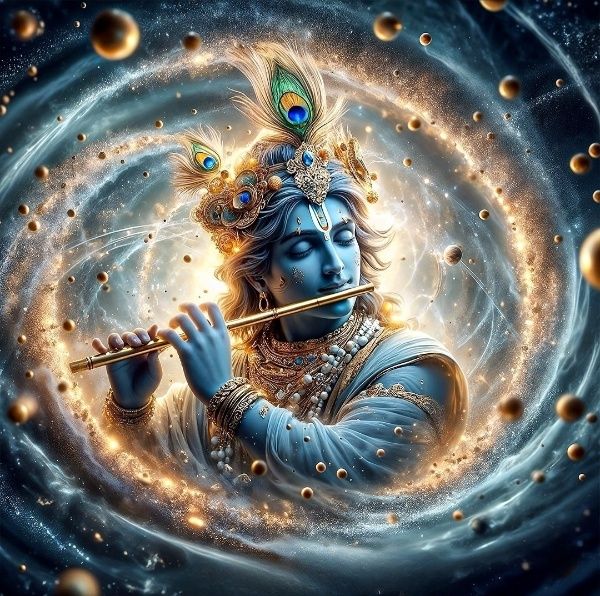
Krishna Avataar
Krishna Avataar The Krishna avataar is the eighth dashaavataar of Lord Vishnu. Lord Vishnu descended on earth in this human form to slay the demon king, Kansa and took birth as his nephew. He was born in prison, to Kansa’s sister, Devaki and Vasudeva and was miraculously transported to Gokul where he was raised by his foster parents, Yashoda and Nand. As Kansa had heard the prophecy that Devaki’s eight son will kill him, Vasudev carried with him the daughter of Nand and Yashoda believing that Kansa would not kill a girl. But the evil Kansa did kill the baby girl, only to realise that she was a celestial being and that the eight son was being raised far away from the prison. Kansa tried to search for his nephew and got many babies of similar age killed too, but Lord Krishna could not be killed. Eventually, he killed his uncle and freed the people from his torture. Lord Krishna’s birth is celebrated as Janmashtami by his devotees. The Krishna avataar is known for his brilliance, strategy, compassion and love. Lord Krishna also played an important role in Mahabharata where his advice to the Pandavas, especially Arjun helped the Pandavas win the war against the Kauravas. He was the trusted charioteer to Arjuna and the entire Kurukshetra war was won due to Lord Krishna’s brilliant strategy. According to some myths, Lord Krishna lived for 126.5 years. There is an interesting myth about his death. It is said that once Krishna sat on a tree to meditate. A hunter called Jara mistook his foot as a deer, and shot an arrow that pierced Krishna’s feet. This arrow was the reason for his demise and it is also believed that Krishna’s demise is the beginning of Kalyug. Dashavataar Kalki Avataar Dashavataar Sugata Buddha Avataar Dashavataar Krishna Avataar Dashavataar Rama Avataar Dashavataar Parshurama Avataar Dashavataar Vaman Avataar Dashavataar Narasimha Avataar Dashavataar Varaha Avataar Dashavataar Kurma Avataar Dashavataar Matsya Avataar Previous Next

Sugata Buddha Avataar
Sugata Buddha Avataar Sugata Buddha is the ninth dashaavataar of Lord Vishnu. Many a times people confuse him with Gautam Buddha. Some religious texts also say that Balarama who is the elder brother of Lord Krishna is the ninth avataar. As per the Agni Puran, Sugata Buddha is four handed where he holds the Vedas, a lotus, a japamala, and a vessel to receive alms. In Shiva Purana, he is described as a bald man with faded clothes who was sent to earth as a monk with the task of helping Shiva defeat a powerful trio of demons called Tripurasura. Sugata Buddha was born in Bodh Gaya and he was born to slay the demon trio, who were the demon Tarakasura’s sons. They had become invincible after Lord Brahma had granted them a boon. It is said that Lord Indra was cursed by the great sage Brihaspati because of Indra’s arrogance. Due to Indra’s vulnerability, Tarakasura ordered the Tripurasura demons to attack the heavens and hence Indra rushed to Lord Shiva to seek refuge. Lord Shiva assumed the temporary charge of the heavens to protect the Gods. After capturing the heavens, they turned their attention to earth and started troubling the sages. They forced them to perform yagna for their benefit. That is when Lord Vishnu took the avataar of Sugata Buddha and used his charm and youthfulness to trap the wives of the demons which weakened the demons and this led to their defeat by Lord Shiva. The story of the ninth avataar of Lord Vishnu is filled with divine intervention and cosmic battles. Dashavataar Kalki Avataar Dashavataar Sugata Buddha Avataar Dashavataar Krishna Avataar Dashavataar Rama Avataar Dashavataar Parshurama Avataar Dashavataar Vaman Avataar Dashavataar Narasimha Avataar Dashavataar Varaha Avataar Dashavataar Kurma Avataar Dashavataar Matsya Avataar Previous Next
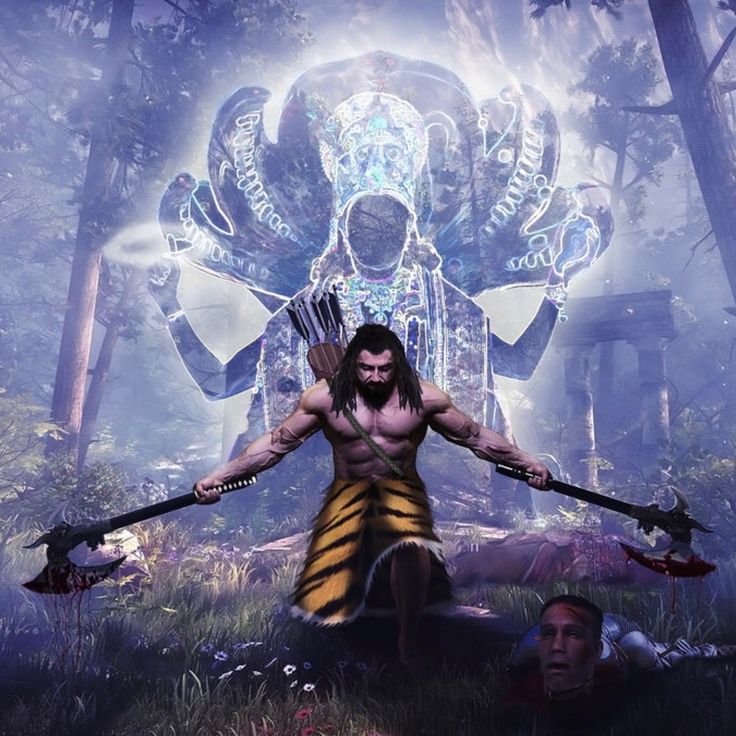
Parshurama Avataar
Parshurama Avataar The Parshurama avataar is the sixth dashaavatar of Lord Vishnu. He is said to be the first Brahmin & Khatriya combination and hence is called a warrior-saint. Sage Parshurama was known to be an angry and aggressive saint. He hails from the Bhargava clan and is the son of the great sage Jamadagni and Mata Renuka. Parshurama was a great devotee of Lord Shiva and he was gifted a divine axe by Lord Shiva. Lord Shiva also taught Parshurama the art of war. There is a famous legend where King Kartavirya Arjun and his army arrived at Sage Jamadagni’s ashram and as they were very hungry and tired, the sage fed the entire army alongwith the King by using the magical powers of his divine cow, Kamadhenu. The greedy king snatched the cow and took it with him to his palace. This infuriated Parshurama who punished the king by killing him and his army. The sons of King Kartavirya killed Jamadagni as revenge. That is when Parashurama swore to kill every Kshatriya on earth until he was calmed by his grandfather. There are many myths associated with Parshurama. One legend of how Lord Ganesha lost a part of his tusk to Parshurama’s anger. It is said that the great Sage once went to meet Lord Shiva, but was stopped at the entrance. This enraged the warrior-sage and in his anger, he threw the axe at Lord Ganesha. As Lord Ganesha knew that the axe was gifted by his father- Lord Shiva, Ganesha allowed the axe to cut away one of his tusks. There is another myth which talks about Parshurama giving the powerful Sudharshan Chakra to Lord Krishna. Another mythological story says that Parshurama is still alive and will be the Guru of Kalki, who is the 10th avataar of Lord Vishnu and who has not yet arrived Dashavataar Matsya Avataar Dashavataar Kurma Avataar Dashavataar Varaha Avataar Dashavataar Narasimha Avataar Dashavataar Vaman Avataar Dashavataar Rama Avataar Dashavataar Krishna Avataar Dashavataar Sugata Buddha Avataar Dashavataar Parshurama Avataar Dashavataar Kalki Avataar Previous Next