
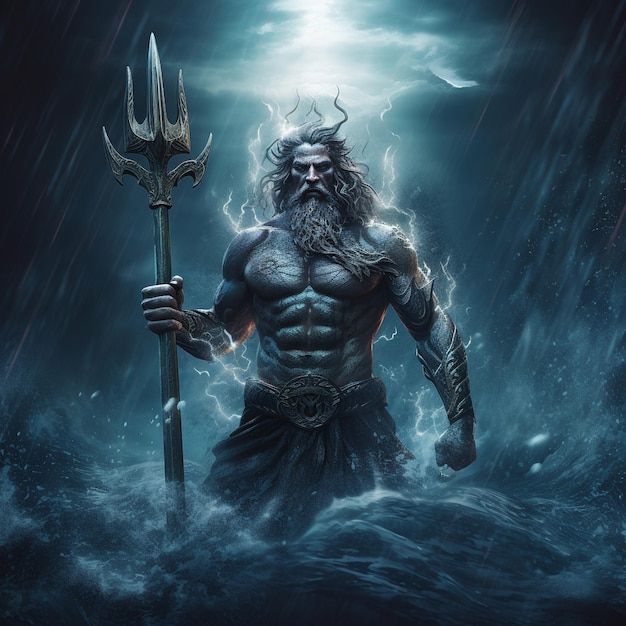
Poseidon Poseidon is the Greek God of the sea, storms and earthquake. Poseidon is always pictured along-with a three-pronged trident which resembles a spear, and is his most important weapon. Poseidon has a unique look- curly hair and a luscious beard. The sacred animals of Poseidon are the dolphin and the horse. Many Greeks credit him with the creation of the horse. Poseidon is the Greek word for ‘husband of earth’. He was worshipped by sailors and fishermen as he could sink ships, create storms or build clear skies. It is said that Poseidon was in love with Demeter and decided to make the world’s most beautiful animal in order to impress her. Eventually, he made the horse, but it took him so long to make it that by the time he finished making it, he wasn’t in love with Demeter anymore. There is another myth which says that the horse was created by Poseidon to gift it to Goddess Athena as a part of their pact. The legend goes as such that both Poseidon and Athena wanted to be the ruler of Athens and hence designed a contest so that the winner would be the Patron God of Athens or the ancient Acropolis. As a part of this contest, Athena created the olive tree and Poseidon created the horse. Eventually Athena won the contest. Poseidon is believed to be ill-tempered and moody. He is Zeus’ and Hades’ brother. The three brothers fought a war with the Titans and won the war. After that they took control, where Zeus got in charge of the sky, Poseidon took control of the seas and oceans and Hades got to rule the underworld. Poseidon’s marriage to Amphritite who is the grand-daughter of Pontos (sea) was done so that Poseidon would have power over the sea and thus become stronger. Poseidon spent most of his time at Mount Olympus even though he had his own palace in the sea, made of coral and gems. Poseidon’s transportation was a chariot pulled by horses with fishtails called hippocampuses. Greek Mythology Zeus Greek Mythology Hera Greek Mythology Aphrodite Greek Mythology Ares Greek Mythology Hephaestus Greek Mythology Poseidon Greek Mythology Hermes Greek Mythology Apollo Greek Mythology Artemis Greek Mythology Athena Greek Mythology Hades Greek Mythology Demeter Previous Next
Hermes
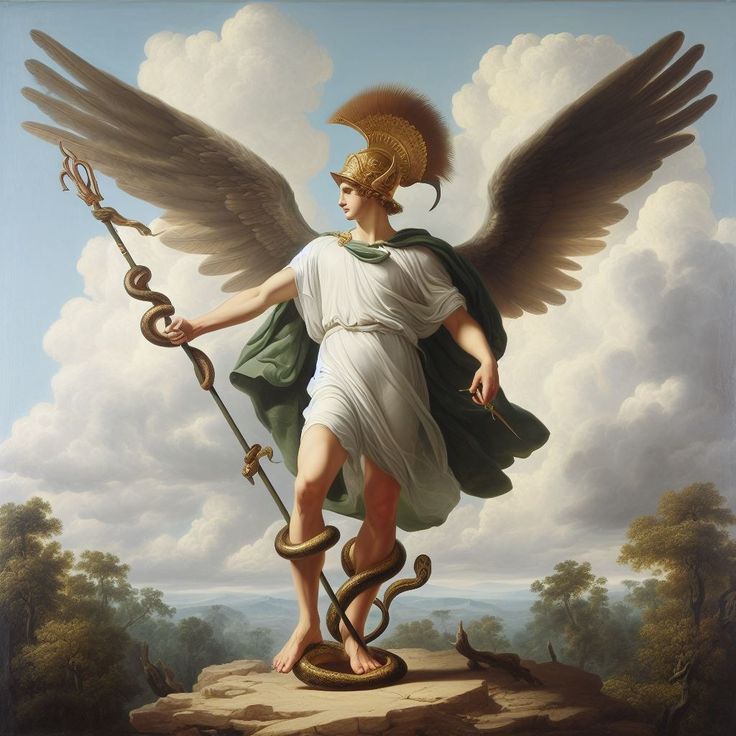
Hermes Hermes is the God of shepherds, travel, and literature. Hermes led the dead to the Underworld which is why he was able to move very quickly between the human realm and that of the Gods and of the dead. Hermes is a very powerful God, and is said to use his cunning and mischievous persona and nature to outwit others, more often than his strength. Hermes is normally portrayed as a young man, with a flying hat known as the ‘petasus’ and winged sandals adorning his feet. He is also shown to have wings attached to his shoulders and hat. He also held a winged staff with snakes wrapped around it. This staff helped Hermes to charm the Gods or wake up people under the spell of the God of sleep. Symbols of Hermes include the caduceus (his staff), the purse (or leather pouch), the winged sandals, the ram and the petasus (his hat). He is also believed to be the messenger and is said to deliver the news to the Gods. According to Greek mythology, when Hermes was one day old, he ran away to explore the world. In his enthusiasm, he killed a tortoise by mistake and then took it’s shell and made it into an instrument. When he was an infant, he went to steal cattle from his half-brother Apollo. When he found the herd, he re-attached all the hooves in reverse order. He did the same to his sandals and tied twigs to his feet to avoid his footprints from being detected, so that it looked like the herd was walking backwards. After some time, Hermes hid the cattle in a cave. As Apollo was the God of prophecies, he predicted that Hermes stole his cattle and caught Hermes who was acting innocent. The mischievous Hermes refused to acknowledge that he had stolen the cattle and hence the matter reached their father Zeus for the final verdict. While the verdict was being made, Hermes started playing a beautiful tune on his instrument- lyre which awed Apollo and he begged his brother to give him the musical instrument. Hermes was waiting for this opportunity and he tricked Apollo into trading the cattle for the instrument and also got himself the position of the divine herdsman. Zeus signed off on this deal and thus Hermes intelligently got what he wanted. Greek Mythology Zeus Greek Mythology Hera Greek Mythology Aphrodite Greek Mythology Ares Greek Mythology Hephaestus Greek Mythology Poseidon Greek Mythology Hermes Greek Mythology Apollo Greek Mythology Artemis Greek Mythology Athena Greek Mythology Hades Greek Mythology Demeter Previous Next
Artemis
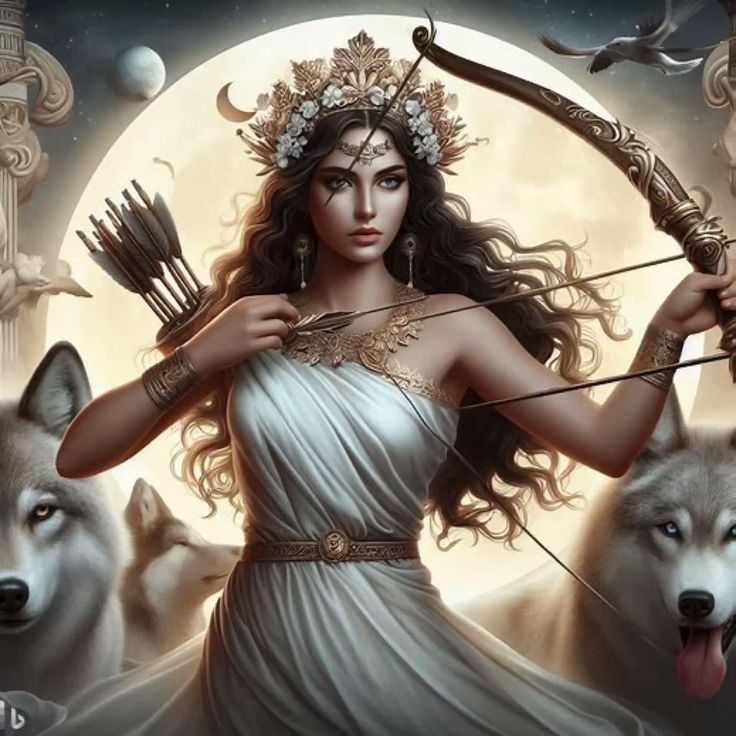
Artemis Artemis is Apollo’s twin sister and is known as the Moon Goddess and the Goddess of the hunt. She was born to Zeus and Leto and just like her brother is very protective of her mother. Artemis is mostly depicted as a woman with brown braided hair, pale skin and silvery eyes. She is also usually draped in a chiton and hunting boots. She arms herself with a bow and a quiver of arrows made by Hephaestus and the Cyclops. The symbols of Artemis include hunting knives, a bow and arrow, and a quiver. She was known as the ‘Master Hunter Artemis’ because of her extra-ordinary skills and precision. She is also known as the virgin Goddess, though she drew the attention and interest of many gods and men. However, it was only her hunting companion, Orion, that won her heart and had her affection. But this love story, had a tragedy where it is believed that Orion was accidentally killed either by Artemis herself or by Gaia, the primordial Goddess of the earth. It is also believed that Apollo feared that Artemis would break her vow of celibacy if she decided to marry Orion and hence tricked her into killing Orion. In many Greek texts and stories, Artemis is described as a fierce Goddess who hunted animals as well as protected them and thus had a dual role of being a nurturer as well as an avenger. Artemis is worshipped by women. Before marriage, girls would give some off their old toys to Artemis and this tradition symbolised the journey from being a child to a woman. The temple of Artemis at Ephesus is her most famous temple of worship. Artemis also represents woman empowerment and independence. There is another interesting story where once when Artemis was taking bath, she was spotted by a mortal whose name was Sipiotes. This angered her and she turned him into a girl. According to Greek mythology, when Artemis was 3 years old, she asked Zeus for 6 wishes and he granted them to her. The wishes were that: to remain unmarried forever to be recognised with more names than her brother Apollo to have a bow and arrows made by the Cyclopes and a knee-length hunting tunic to wear to bring light to the world to have sixty nymphs as friends to have all mountains under her control Greek Mythology Apollo Greek Mythology Zeus Greek Mythology Hera Greek Mythology Aphrodite Greek Mythology Ares Greek Mythology Hephaestus Greek Mythology Poseidon Greek Mythology Hermes Greek Mythology Artemis Greek Mythology Athena Greek Mythology Hades Greek Mythology Demeter Previous Next
Athena
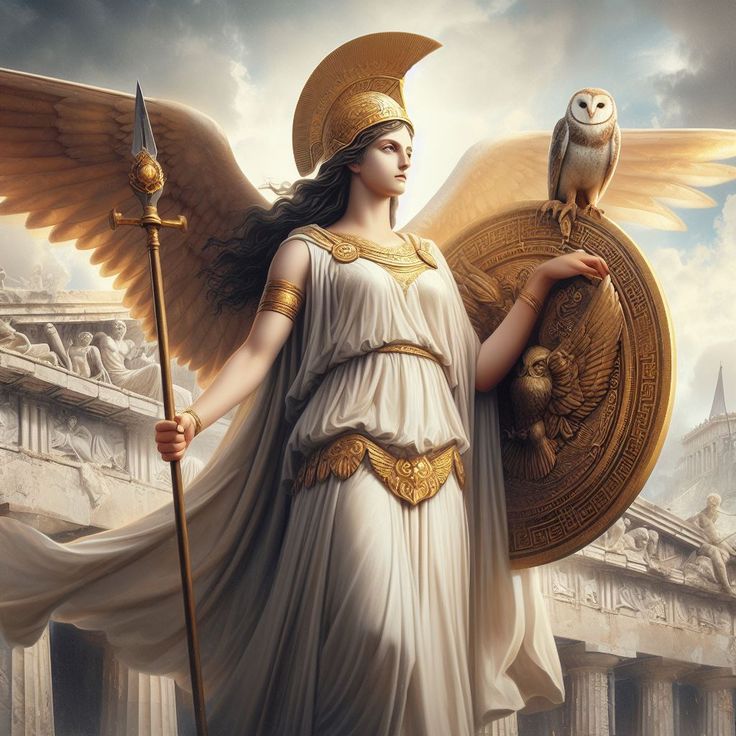
Athena Athena is one of the most important ancient Greek Goddess. She represents many things and is worshipped as the Goddess of courage, wisdom, strength, inspiration, law and justice, mathematics, skill, strategic warfare, arts and crafts. Athena is often depicted as a warrior Goddess armed with a spear, a shield and a helmet. She is also depicted with a shield called the ‘Aegis’ which has the head of the monster Medusa. Symbols associated with Athena include owls, spears, helmets, armour, snakes and olive trees. While Athena has beauty and bravery, she is also known to be sharp and wise and is known to always weigh her decisions before taking a call, especially in matters of war or peace. She invented the ship, chariot, plough and rake. When the great Zeus married the Oceanid Metis, a prophecy at that time predicted that Metis would bear a son who would pose as a serious threat to Zeus. Right after Metis revealed her pregnancy, Zeus swallowed the child in order to protect his kingdom. Zeus started to feel a unbearable pain in his head and asked Hephaestus to put an end to it. Hephaestus obeyed and opened Zeus’s head with an axe without hurting him. All of a sudden, Athena sprang out of Zeus’ head wearing armour and uttering war-like cries. Her shield was extremely strong and it said that even Zeus’ lighting thunderbolt could not pierce it. But Athena was very loyal and once Zeus realised her love and devotion for him, she became Zeus’ favourite as she never rebelled against him. Athena is also known as the patron of the city of Athens and won the title after defeating her uncle Poseidon who also wanted to rule Athens. In an open and fair competition, Zeus asked both the contenders to gift a unique gift to the people of Athens. Poseidon gave them a spring with his trident, but while the feat was impressive, as the water was salty it was not useful. On the other hand, Athena gifted the people with an Olive tree and hence gave them food, olive oil, wood and shade and as all this was useful, she was declared as the contest winner. The Parthenon in Acropolis, Greece is dedicated to Athena. Athena played a significant role in the Trojan war where she supported and provided divine protection to the Greek heroes like Odysseus and Achilles, with her wisdom and strategic ideas. Greek Mythology Zeus Greek Mythology Hera Greek Mythology Aphrodite Greek Mythology Ares Greek Mythology Hephaestus Greek Mythology Poseidon Greek Mythology Hermes Greek Mythology Apollo Greek Mythology Artemis Greek Mythology Athena Greek Mythology Hades Greek Mythology Demeter Previous Next
Hades
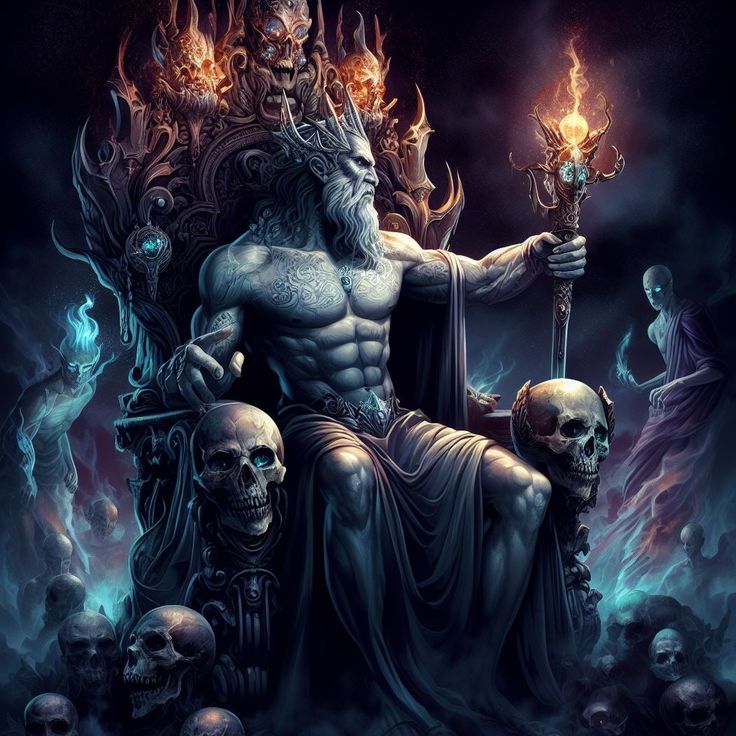
Hades Hades is the Greek God of the death and the Underworld. While the underworld is associated with hell and evil, Greeks looked at the underworld as a place of darkness and Hades was regarded as the tab keeper of the deadly world laws. He is looked upon as the jailor of the dead souls and is responsible to keep the gates of the underworld locked so that no dead soul can escape from his kingdom. Hades is depicted as a grown man with a beard and a crown holding a two-pronged staff, often with his three headed dog, Cerberus. Symbols associated with Hades include a sceptre, Cerberus, drinking horn and the cypress tree. One of Hades’ special powers is invisibility. Mortals are generally scared of him and thus he does not have many worshippers or temples. Hades wears a helmet called the Helm of Darkness that allowed him to become invisible. He once loaned his helmet out to the hero Perseus to help him defeat the monster Medusa. The famous legend of Hades is about his relation with his wife Persephone. Persephone was Hades’ sister and Demeter’s daughter. It is said that when Persephone and her friends were plucking flowers, suddenly she saw a unique flower appear on the ground. Out of curiosity, she went to pluck the flower and suddenly the earth opened up. Hades came out of the ground in his horse-chariot and kidnapped Persephone. Demeter started searching for her daughter. Even after 9 days, she would not find Persephone and that is when she met Hekate who is the Goddess of ghosts and Helios who is the Sun God. As both Hekate and Helios had witnessed the kidnapping, they told Demeter the entire truth. To get back her daughter, Demeter disguised herself as an old woman for almost a year. As she is the Goddess of fertility, the world got famine struck and the earth and land lost it’s fertility. Zeus wanted Demeter to return to Mount Olympus and so he sent Iris with lovely gifts to tempt Demeter to come back. But Demeter was adamant that she would return only after she found her daughter. That is when Zeus intervened and sent Hermes to convince Hades to release Persephone. While Hades agreed, he tricked Persephone and gave her pomegranate seeds to eat which ensured that she was tied to the underworld for infinity. Later Zeus asked Demeter and Hades to compromise and arrive at one mutually beneficial solution. It was thus decided that Persephone would stay with Hades for 1/3rd of the year as his wife and with her mother and other Gods for 2/3rd of the year. It is because of this unique arrangement that Persephone is called a dual nature Goddess- for one part she is the queen of the underworld and for the other part she is the goddess of fertility. Greek Mythology Zeus Greek Mythology Hera Greek Mythology Aphrodite Greek Mythology Ares Greek Mythology Hephaestus Greek Mythology Poseidon Greek Mythology Hermes Greek Mythology Apollo Greek Mythology Artemis Greek Mythology Athena Greek Mythology Hades Greek Mythology Demeter Previous Next

Demeter
Demeter Demeter is the Goddess of agriculture. She is the daughter of Kronos and Rhea and sister and wife of Zeus. Poseidon was in love with Demeter but she never reciprocated back. Demeter is not among the top Goddess in Greek mythology. She was one of the many children who was swallowed by her father basis the prophecy which said that one of Kronos’ children would be the reason for his debacle. Persephone is the daughter of Demeter and Zeus. Hades took help from Mother Earth- Gaia and kidnapped Persephone. Later Persephone was rescued by Demeter. Demeter is often pictured as a mature woman sitting on a throne. She wears a crown and carries a torch or sheaves of wheat. She is believed to be the creator of the first grain in Sicily and then she ensured that the knowledge of harvesting is spread across the world. Whenever Demeter travels, she rides a golden chariot which is pulled by dragons. Demeter’s symbols include wheat, a cornucopia, a torch and swine. She had control over the harvest and the growing of grains. She can cause plants to grow, or not grow, and has control over the seasons and weather too. Demeter is known to be short-tempered and can get angry very quickly. There are many stories of her punishing the guilty. It is believed that Demeter transformed Ascalabus into a gecko when he mocked at her for drinking water too fast. She also is said to have turned King Lyncus into a lynx after he tried to kill one of her favourite mortals. She also rewarded the ones with whom she was happy. One mortal called Phytalus welcomed the disguised Demeter to his house and was rewarded with a fig tree. Two other mortals were rewarded with fresh crops due to their good hospitality. Hence some of the lesser known myths also link her as the Goddess of Law and Order. Greek Mythology Zeus Greek Mythology Hera Greek Mythology Aphrodite Greek Mythology Ares Greek Mythology Hephaestus Greek Mythology Poseidon Greek Mythology Hermes Greek Mythology Apollo Greek Mythology Artemis Greek Mythology Athena Greek Mythology Hades Greek Mythology Demeter Previous Next
Kaali
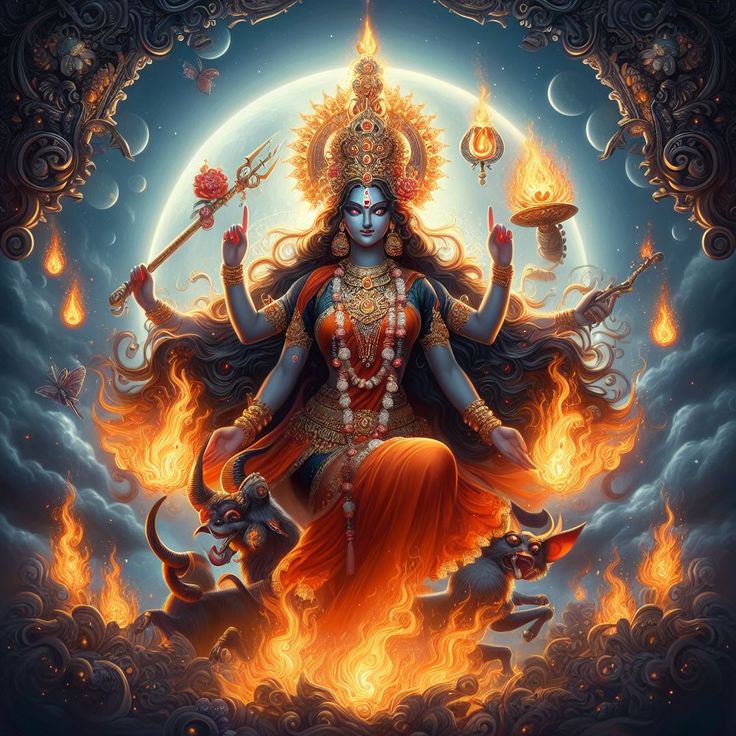
Kaali Kaali Mata, also known as Mahakaali or Bhadrakaali is the goddess of ultimate power, war, time, and destruction of evil. Kaali Mata embodies Shakti, which is feminine energy and creativity. She is an incarnation of Goddess Parvati, wife of Lord Shiva and represents the fiercest form of Shakti (energy). Her name originates from the Sanskrit word Kaal which means time. She is known for her dark blue colour and is depicted partially dressed, with a long tongue outside her mouth, four arms, with a sword in one hand and the head of a demon in another. The other two hands bless her worshippers. Her hair is usually long and free flowing. She has two dead heads for her earrings, a string of demon skulls that she has killed as a necklace, and a girdle made of human hands as her clothing. It is said that in a battle with the demons, when Goddess Parvati was angry, her wrathful avataar appeared in the form of Goddess Kaali and she beheaded as well as swallowed many demon heads. Hence, she is frequently depicted with weapons, skulls and blood-stained lips. Sometimes she is also seen wearing the tiger skin and with a trident and a sword. Kaali has 21 forms and all of them have the combination of the protector of good and the destroyer of evil and ego. There is another myth which talks of the birth of Kaali. It is said that she appeared from Lord Vishnu’s sleeping body – Yoga Nidra to wake him up when Lord Brahma approached him to help fight against two demons who were causing havoc. Goddess Kaali is usually pictured standing with her right foot on Lord Shiva who is lying beneath her. There is a famous legend around this which has the story of Raktabeej demon attached to it. Raktabeej was a very powerful demon who had a boon that he could duplicate himself whenever a drop of blood (rakta) fell on the earth. Due to this, he created havoc everywhere and could not be destroyed. Hence Shakti in the form of Goddess Durga was created to fight this demon. Whenever Shakti killed Raktabeej, multiple Raktabeej got formed and eventually a large army of Raktabeej got created. Enraged by this, Goddess Durga took form of Kaali Mata and killed the entire army as well as Raktabeej and drank all the blood. In the war, she forgot that she had slayed the demon and continued slaying everyone. Seeing this, Lord Shiva lay down among the corpses where Kaali Mata was dancing. And while dancing, she stepped on Lord Shiva by mistake. It is believed that her tongue came out at that time as she was embarrassed and ashamed that her blood hunger prevented her from recognizing her own husband. This also calmed her anger and she came back to her original form and stopped the world from destruction. Hindu Mythology Kaali Hindu Mythology Brahma Hindu Mythology Saraswati Hindu Mythology Vishnu Hindu Mythology Lakshmi Hindu Mythology Shiva Hindu Mythology Parvati Hindu Mythology Ganesha Hindu Mythology Durga Hindu Mythology Indra Hindu Mythology Rama Hindu Mythology Sita Hindu Mythology Hanuman Hindu Mythology Krishna Hindu Mythology Buddha Previous Next
Sekhmet
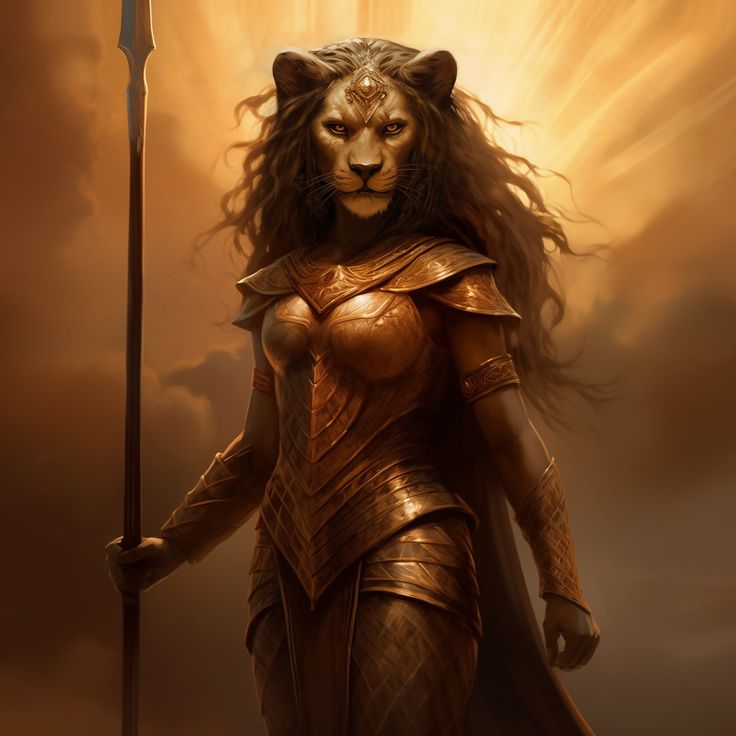
Sekhmet Sekhmet is the Goddess of destruction, plagues and healing. She is often portrayed as a woman wearing a red dress with the head of a lioness, wearing a sun disc circled by a cobra on her head. Amulets depict her usually standing, holding a papyrus-shaped scepter. She is also addressed as the solar goddess. The “book of dead” has references of Sekhmet as a creative and a destructive force. The story of Sekhmet is an interesting one. When the Sun God – Ra, her father decided to destroy mankind due to their disobedience and crime, he created Sekhmet who created havoc on earth, drinking blood of the dead and the dying. Ra realized he had made a mistake as Sekhmet was unstoppable, he planned and got the local people to brew some beer, dye it red and then pour it on the ground to pacify her blood thirst. 7000 jars of red beer was poured in the quite hours of the night when Sekhmet was sleeping. The next day, when Sekhmet woke up, she thought the beer was blood, and drank it and got intoxicated and eventually stopped her killings. People today relate this to the flooding of Nile when it turns red due to silt and it is believed that Sekhmet swallows the river to keep it from destroying Egypt. She is also called the protector of the Ma’at. Sekhmet is also said to breathe fire. Egyptians compare her fiery breath to the hot winds of the desert. Bastet who is the cat-headed goddess is considered as the gentle counterpart to the lion-headed Sekhmet whose uncontrollable temper was feared by all. Celebrations and sacrifices are often offered to the Goddess to appease her after the war and end the destruction. She is considered as the angry manifestation of her father Ra’s power and her famous epithet is “the one before whom evil trembles”. She is also considered as the goddess of strategy. While her dark and furious side may bring disease and plague to those who wrong her, she is also a master of the art of medicine as she provides the cure to various ailments she may have brought to humankind. Egyptians in the olden days, looked up to Sekhmet as a curet for all their problems. In order to stay on their good side, they offered her food and drinks, music and burned incense. They would whisper their prayers into the ears of cat mummies before offering them to Sekhmet as it was believed that cats had a direct connection to her. Sekhmet’s son Mahees was the patron of pharaohs and pyramid texts. This elevated Sekhmet in the Gods and Goddesses pantheon hierarchy. While Sekhmet protected the pharaohs and led them to war, she was the patron of physicians and healers and her priests and worshippers were skilled doctors. Egyptian Mythology Amun-Ra Egyptian Mythology Nekhbet Egyptian Mythology Bes Egyptian Mythology Nephthys Egyptian Mythology Sobek Egyptian Mythology Khonsu Egyptian Mythology Osiris Egyptian Mythology Thoth Egyptian Mythology Seth Egyptian Mythology Isis Egyptian Mythology Geb & Nut Egyptian Mythology Bastet Egyptian Mythology Anubis Egyptian Mythology Horus Egyptian Mythology Sekhmet Previous Next
Brahma
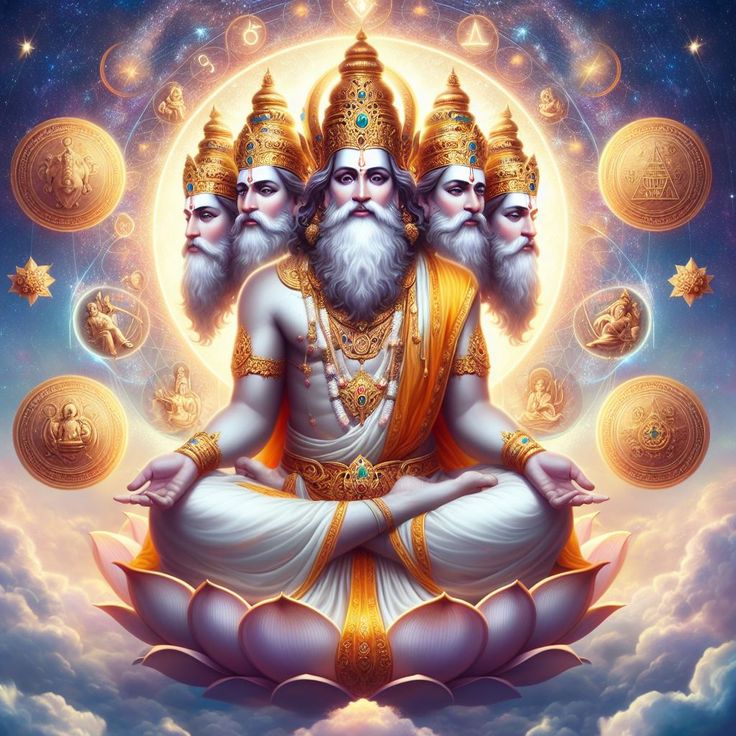
Brahma Lord Brahma is regarded as the creator of the universe. He is not only the creator of the world but is also regarded as the father of Dharma which is the correct way of living one’s life. Lord Brahma is commonly represented with a long white beard with a golden skin. He has four heads and four mouths which represent the four Vedas. He has four arms, but he does not carry any weapon in his hands. Instead, he has a jug and a spoon, a prayer book which denotes the holy scriptures, a bead necklace like a rosary and a lotus. Lord Brahma’s creation is a famous myth. It is believed that Brahma self-created himself within a golden egg. He then went on to create Gods, demons, man, and animals. In his process of creation, Brahma first created the demons from his thigh and when he realized it, he abandoned his body which became night. He then went on to create the Gods and Goddesses and abandoned that part of the body too which became the Day. This is the myth which explains why demons come out at night and Gods rule during the day. Another birth myth says that Lord Brahma was born inside a lotus flower which originated from Lord Vishnu’s navel. The first man created by Lord Brahma was Manu. It is said that Lord Brahma initially had 5 heads. As he is known as the father of creation, after creating the world, he got proud of his achievement. He even got into an argument with Lord Vishnu that he was the most supreme God. When Lord Shiva came to the scene, he intervened and released a light and asked both Brahma and Vishnu to find it. While both the Gods were not able to trace the light, Vishnu told the truth to Shiva but Brahma lied and said that he found the light. The lie and the arrogance angered Lord Shiva who chopped one head off and cursed him that Lord Brahma will never be worshipped as a primary deity in all the worlds. There is one Brahma temple in Pushkar in Rajasthan. Lord Brahma’s consort is Goddess Saraswati. It is believed that Brahma created his 10 sons and 1 daughter using the power of his mind. The 10 sons were called Prajapatis. He is also the creator of the Vedas which are the most powerful scriptures of philosophy, religion and spiritual way of life. It is believed that he received this infinite knowledge from Lord Vishnu who asked him to cascade it in the world. Another legend believes that his immense knowledge and wisdom was achieved after “tapasya” or meditation of 100 years. Hindu Mythology Kaali Hindu Mythology Brahma Hindu Mythology Saraswati Hindu Mythology Vishnu Hindu Mythology Lakshmi Hindu Mythology Shiva Hindu Mythology Parvati Hindu Mythology Ganesha Hindu Mythology Durga Hindu Mythology Indra Hindu Mythology Rama Hindu Mythology Sita Hindu Mythology Hanuman Hindu Mythology Krishna Hindu Mythology Buddha Previous Next
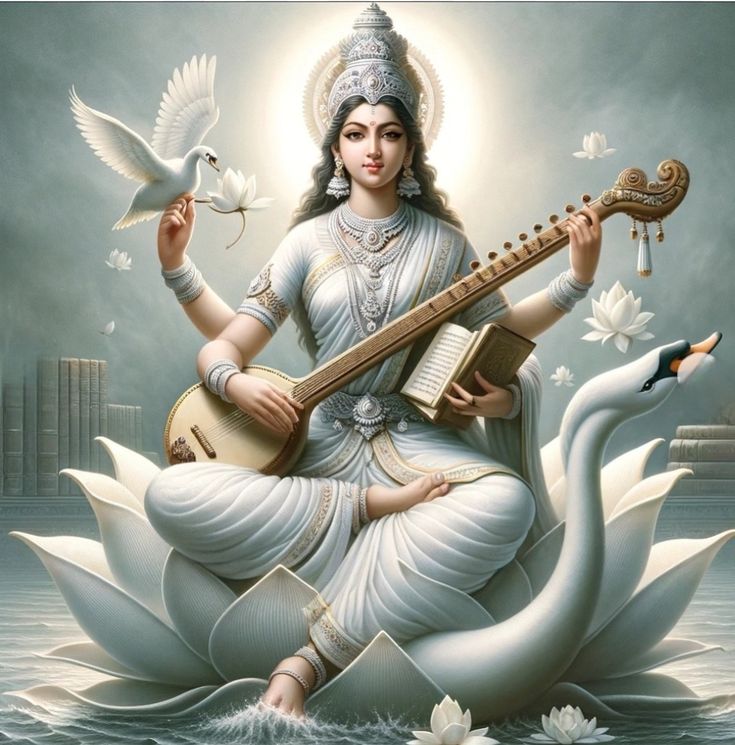
Saraswati
Saraswati Goddess Saraswati is one of the Tridevi, along with Goddess Lakshmi and Goddess Parvati. She is the Goddess of music, art, speech, knowledge, and wisdom. Saraswati is also known as the daughter of Shiva and Durga. It is believed that Maa (mother) Saraswati was created by Lord Brahma to create order in the Universe. After creating the Universe, Lord Brahma realised that it was not formed properly. Goddess Saraswati emerged from his mouth and told him how to create order in the Universe. This is how the sun, moon, stars, oceans, seasons, etc. came into existence. Goddess Saraswati blesses humans with the power of speech and wisdom. Saraswati is usually depicted playing a string instrument called the Veena, which she uses to play music of love and life. She is generally shown in a white sari, sitting on a white lotus. Her four arms represent the four Vedas, holding a book, a mala, a water pot and the Veena. She rides on a white swan which symbolizes purity and discrimination. Maa Saraswati is also depicted as a river Goddess. Maa Saraswati’s birthday, Vasant Panchami, is a Hindu festival celebrated every year on the fifth day of the fortnight of the lunar month of Magha. Devotees worship her during this time. There is a very famous legend where Goddess Saraswati obtained the Somras nectar from the Gandharvas, who were the demi-gods. These Gandharvas stole the immortal Soma plant so that they could also live forever. While the Gods were angry and wanted to fight and get back their plant, Goddess Saraswati walked into their garden and played her music. Hearing the melodies, the Gadharvas fell into a trance and were so mesmerized with the tunes that they begged the Goddess to teach them music. Saraswati said that she would teach them only if they would return the Soma plant. The desire to learn the music was so high, that the Gandharvas agreed to return the Soma plant to it’s rightful owners. That is how the Gods got back their Soma plant and the Gandharvas who learnt music from Goddess Saraswati became the celestial musicians whose skill could not be matched by many. Hindu Mythology Kaali Hindu Mythology Brahma Hindu Mythology Saraswati Hindu Mythology Vishnu Hindu Mythology Lakshmi Hindu Mythology Shiva Hindu Mythology Parvati Hindu Mythology Ganesha Hindu Mythology Durga Hindu Mythology Indra Hindu Mythology Rama Hindu Mythology Sita Hindu Mythology Hanuman Hindu Mythology Krishna Hindu Mythology Buddha Previous Next