

Geb & Nut The Egyptian Gods series ends with the first Gods since the beginning of time. The God of the Earth, Geb was one of the first Gods to appear from the Sea of Chaos. Geb is portrayed as a man; made of earth, with rivers, forests and hills across his entire body. Nut is Geb’s wife who is the Goddess of the Sky. She is portrayed as a woman with skin like a starry sky, dark blue and covered in constellations. She is often pictured stretching over Geb, as the sky stretches over the earth. Geb is also considered as a father of snakes and has a viper around his neck. It is believed that while he was also related to making soils fertile and habitable, his laughter caused earthquakes. While the two Gods embody opposites, their inseparable love is unique and impressive. Geb and Nut were twins and were born tightly holding each other’s arms. They had to be separated by their father Shu who is the God of air at birth. This is the symbolic explanation why earth and sky have the air in between them. According to the legends, during the day, the Sun and the Moon would pass across Nut’s body and Nut would swallow then by dusk. They would then pass through her belly during the night and be reborn at dawn. This is the explanation of the day and night cycle. Another famous myth talks of how Ra- who is the grandfather of Geb and Nut had heard a prophecy that that one of their children would overthrow him. Due to this insecurity, he warned Nut not to give birth on any of the 365 days of the year. Nut hit upon an idea and gambled with Khonsu for moonlight. She won the gamble and got 5 additional days. On each day, she delivered one child- Osiris, Horus, Set, Isis, and Nephthys. As punishment for her disobedience, Ra separated Nut and Geb. It is said that despite being separated, their love never diminished. If Nut would try and escape the sky, he ordered the clouds to flicker with lightning and ordered the winds to push her back. Egyptian Mythology Amun-Ra Egyptian Mythology Nekhbet Egyptian Mythology Bes Egyptian Mythology Nephthys Egyptian Mythology Sobek Egyptian Mythology Khonsu Egyptian Mythology Osiris Egyptian Mythology Thoth Egyptian Mythology Seth Egyptian Mythology Isis Egyptian Mythology Geb & Nut Egyptian Mythology Bastet Egyptian Mythology Anubis Egyptian Mythology Horus Egyptian Mythology Sekhmet Previous Next
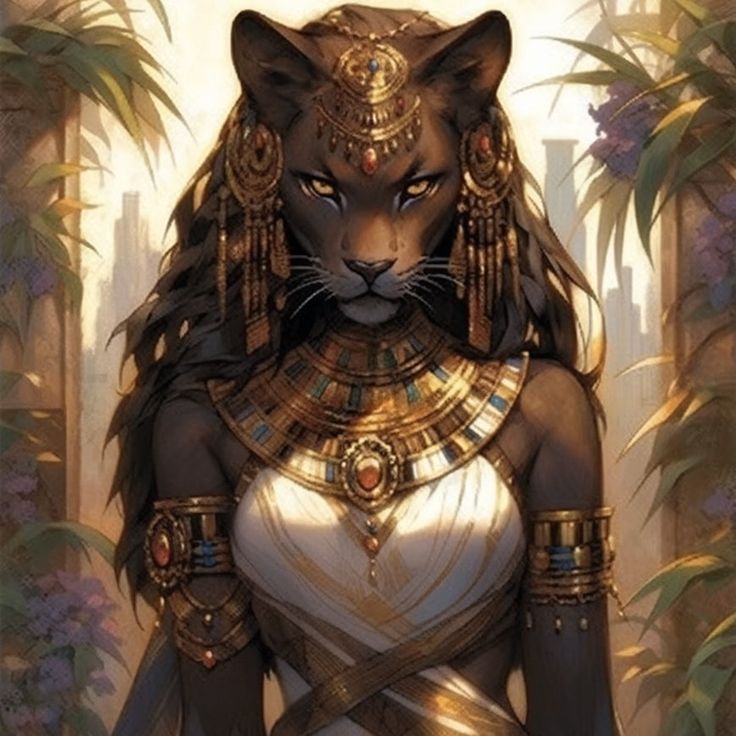
Bastet
Bastet Bastet is the Egyptian Goddess of protection, fertility, childbirth and cats. She protected peoples’ homes from evil spirits and disease, especially diseases associated with women and children. She is often portrayed half- human and half cat, having a head of a cat and body of a woman, has a sistrum (music instrument) and is usually accompanied by a litter of kittens. Cats, which have lots of babies and take good care of them, were seen as mini versions of Bastet. Cats were extremely popular in Egypt and were known to ward away rodents and snakes who were big troubles for the people. Women in Egypt worshipped this Cat Goddess and told her their secrets. Because of Bastet, cats were considered as treasured and valuable pets. People also wore protective amulets for good luck, especially when their times were bad. Bastet was the daughter of Ra, wife of Ptah who is the God of architecture and mother of Mihos. Bastet was the defender of Ra and was his faithful cat who was sent into the Duat to fight his arch nemesis Apophis (the Chaos Serpent). It is believed that she travelled with the Sun God every day and night, and protect him. Bastet is also closely associated with Sekhmet- the lioness Goddess and many people considered both of them as one. The myth talks about the time when Ra was a mortal pharaoh. Once he got angry with the Egyptians and hence sent Sekhmet to punish them. Sekhmet killed many people and even drank their blood. As Sekhmet’s killings were unstoppable, Ra then thought of an idea. He asked the people to pour red beer over the land so that Sekhmet mistakes it as blood and drinks it. The plan worked and Sekhmet drank the beer and fell asleep after getting drunk. When she woke up, she had transformed into Bastet. This myth also talks about how Bastet transformed from a fierce lioness to a gentle cat. There is another famous myth which says that the colour turquoise originated from Bastet’s blood which changed its colour from red to turquoise after it touched the ground. Due to her popularity, her annual festival is one of the most lavish events in Egypt where people pray for safety and women pray for fertility. The most followers for Bastet are from the city of Bubastis. Egyptian Mythology Amun-Ra Egyptian Mythology Nekhbet Egyptian Mythology Bes Egyptian Mythology Nephthys Egyptian Mythology Sobek Egyptian Mythology Khonsu Egyptian Mythology Osiris Egyptian Mythology Thoth Egyptian Mythology Seth Egyptian Mythology Isis Egyptian Mythology Geb & Nut Egyptian Mythology Bastet Egyptian Mythology Anubis Egyptian Mythology Horus Egyptian Mythology Sekhmet Previous Next
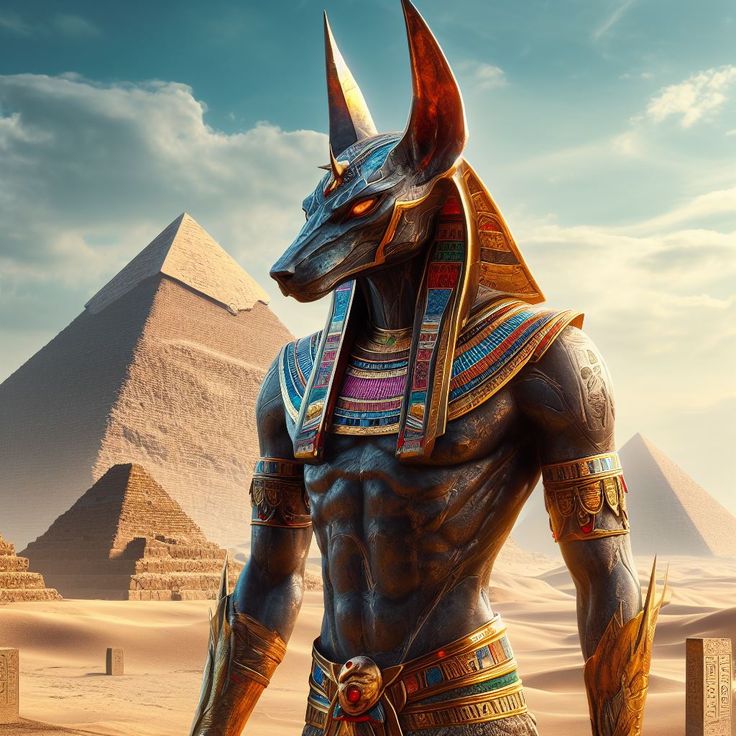
Anubis
Anubis Anubis is the Egyptian God of mummification and the afterlife. He is also the patron God of the lost souls and the helpless. It is believed that in the afterlife, Anubis owns the weighing scale and determines whether a soul can to enter the realm of the dead or not. By weighing the heart of a deceased person against an ostrich feather, Anubis decided who would be devoured by Ammit who was the Egyptian Goddess and the devourer of the dead souls. If the dead souls were lighter than the feather, they could visit the heavens else they would be killed by Ammit. Anubis was born to Nephthys and Seth but was given to Osiris and Isis by Nephthys as she didn’t want Anubis to know his real father. He is portrayed as a black canine faced muscular man with the head of a jackal. The colour black was chosen for its symbolism which denotes the decay of the body and the fertile soil of the Nile which is regeneration and life. As the protector of the afterlife, he had the responsibility to make sure that the dead received their burial rights. It is said that thousands of years ago, hungry jackals would dig up dead bodies and would feed on them. To have such a destruction of their loved ones in afterlife would pain the Egyptian family members. People would pray to Anubis who is the jackal God and make offerings to spare the bodies of their loved ones. Anubis played a very significant role in the mummification process. Priests would perform rituals and embalm the dead body under Anubis’s guidance so that the dead body was preserved perfectly and would have an easy transition into the world of the dead. In the famous myth where Seth deceptively killed Osiris, and after Isis found and assembled together her husband’s body parts, it is believed that she went to the Sun God Ra for help who then instructed Anubis to help Isis. Anubis alongwith Horus assisted Isis with the embalming process and wrapped Osiris’ body and mummified him so that he could stay alive in the afterlife. Anubis was also capable of shapeshifting and it is said that when he saw Osiris’s dead body, he was so shocked that he turned himself into a lizard. Egyptian Mythology Amun-Ra Egyptian Mythology Nekhbet Egyptian Mythology Bes Egyptian Mythology Nephthys Egyptian Mythology Sobek Egyptian Mythology Khonsu Egyptian Mythology Osiris Egyptian Mythology Thoth Egyptian Mythology Seth Egyptian Mythology Isis Egyptian Mythology Geb & Nut Egyptian Mythology Bastet Egyptian Mythology Anubis Egyptian Mythology Horus Egyptian Mythology Sekhmet Previous Next
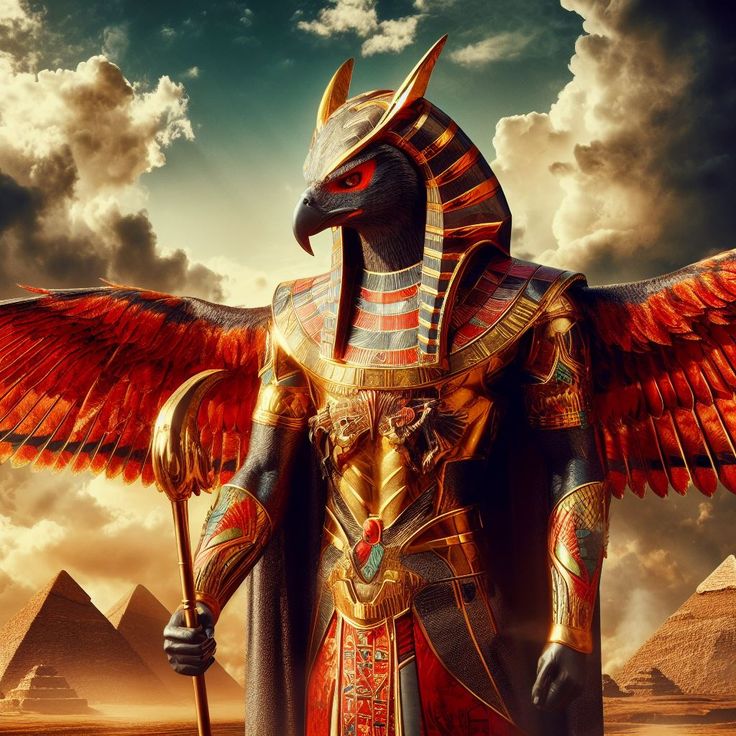
Horus
Horus Horus is the War God and the child of Isis and Osiris. He is also addressed as the Sky God or the “Distant One”. Horus has many symbols, some of which include the Eye of Horus and the Falcon. Horus’s appearance is portrayed as a hawk / falcon headed man, holding a sceptre and the Ankh. Horus proudly wears a white and red crown, where the two colours- white and red represent Upper Egypt and Lower Egypt respectively. His eyes are of two colours: gold and silver. His right eye is said to represent the Sun and the left eye is said to represent the Moon. This is also the reason why one of Horus’ eye shines brighter than the other as the sun shines brighter than the moon. According to one of the mythology stories, Horus lost his left eye (eye of the moon) in a battle with Seth when he was avenging his father, Osiris’ death. It got magically restored and healed by the Goddess Hathor. This is also a mythical explanation of the various phases of the moon. The ancient Egyptians believed that their Pharaoh was the “living Horus” who possessed superpowers and great stamina and strength. After the death of Osiris, the group of 9 Gods which were called the Ennead were brainstorming on who would take over the throne. Two contenders were shortlisted- Seth and Horus. While Seth was Osiris’ son and technically the logical successor, the Gods believed that he was still young and unprepared to rule Egypt. Seth on the other hand was more matured and experienced, but he also was the murderer of Osiris. That was when the Ennead decided to hold a competition and the winner would receive the kingship. Seth suggested that both of them can transform into a hippopotamus and dive into the Nile. The one who holds their breath longer would be the winner. This was suggested by Seth because he was associated with the deadly hippopotamus and he knew that he would win. Isis saw through Seth’s corrupt intentions and she came to Horus’ rescue and thrust a copper spear in his body and this made him lose the contest. Horus was then proclaimed by the Ennead as the rightful descendant to the throne and was then titled the “Lord of the two lands” of upper and lower Egypt. Egyptian Mythology Amun-Ra Egyptian Mythology Nekhbet Egyptian Mythology Bes Egyptian Mythology Nephthys Egyptian Mythology Sobek Egyptian Mythology Khonsu Egyptian Mythology Osiris Egyptian Mythology Thoth Egyptian Mythology Seth Egyptian Mythology Isis Egyptian Mythology Geb & Nut Egyptian Mythology Bastet Egyptian Mythology Anubis Egyptian Mythology Horus Egyptian Mythology Sekhmet Previous Next
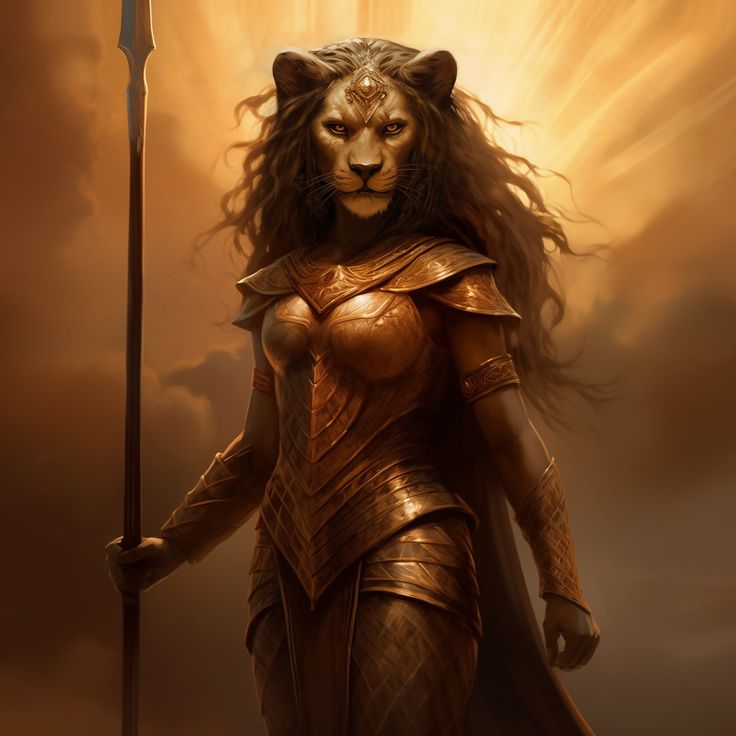
Sekhmet
Sekhmet Sekhmet is the Goddess of destruction, plagues and healing. She is often portrayed as a woman wearing a red dress with the head of a lioness, wearing a sun disc circled by a cobra on her head. Amulets depict her usually standing, holding a papyrus-shaped scepter. She is also addressed as the solar goddess. The “book of dead” has references of Sekhmet as a creative and a destructive force. The story of Sekhmet is an interesting one. When the Sun God – Ra, her father decided to destroy mankind due to their disobedience and crime, he created Sekhmet who created havoc on earth, drinking blood of the dead and the dying. Ra realized he had made a mistake as Sekhmet was unstoppable, he planned and got the local people to brew some beer, dye it red and then pour it on the ground to pacify her blood thirst. 7000 jars of red beer was poured in the quite hours of the night when Sekhmet was sleeping. The next day, when Sekhmet woke up, she thought the beer was blood, and drank it and got intoxicated and eventually stopped her killings. People today relate this to the flooding of Nile when it turns red due to silt and it is believed that Sekhmet swallows the river to keep it from destroying Egypt. She is also called the protector of the Ma’at. Sekhmet is also said to breathe fire. Egyptians compare her fiery breath to the hot winds of the desert. Bastet who is the cat-headed goddess is considered as the gentle counterpart to the lion-headed Sekhmet whose uncontrollable temper was feared by all. Celebrations and sacrifices are often offered to the Goddess to appease her after the war and end the destruction. She is considered as the angry manifestation of her father Ra’s power and her famous epithet is “the one before whom evil trembles”. She is also considered as the goddess of strategy. While her dark and furious side may bring disease and plague to those who wrong her, she is also a master of the art of medicine as she provides the cure to various ailments she may have brought to humankind. Egyptians in the olden days, looked up to Sekhmet as a curet for all their problems. In order to stay on their good side, they offered her food and drinks, music and burned incense. They would whisper their prayers into the ears of cat mummies before offering them to Sekhmet as it was believed that cats had a direct connection to her. Sekhmet’s son Mahees was the patron of pharaohs and pyramid texts. This elevated Sekhmet in the Gods and Goddesses pantheon hierarchy. While Sekhmet protected the pharaohs and led them to war, she was the patron of physicians and healers and her priests and worshippers were skilled doctors. Egyptian Mythology Amun-Ra Egyptian Mythology Nekhbet Egyptian Mythology Bes Egyptian Mythology Nephthys Egyptian Mythology Sobek Egyptian Mythology Khonsu Egyptian Mythology Osiris Egyptian Mythology Thoth Egyptian Mythology Seth Egyptian Mythology Isis Egyptian Mythology Geb & Nut Egyptian Mythology Bastet Egyptian Mythology Anubis Egyptian Mythology Horus Egyptian Mythology Sekhmet Previous Next