
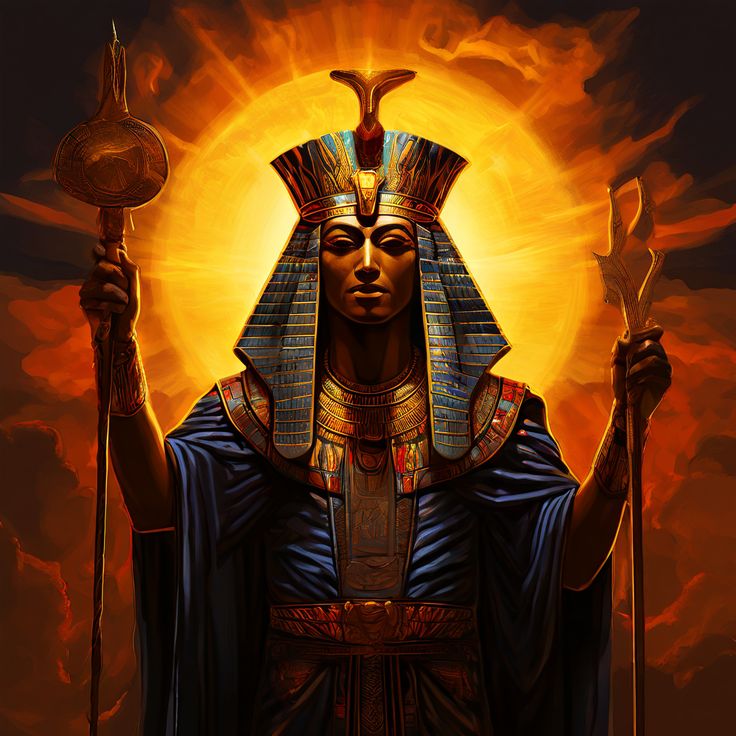
Amun-Ra As per Egyptian mythology, Amun-Ra is the Sun God and the most important God in ancient Egypt. He is the chief of the Egyptian Gods and is known to be the creator of the Universe and restorer of Ma’at which is the ancient Egyptian word for “order”. Being the Sun God, he is said to travel across the sky in a burning boat. As the Sun is the giver of life, Amun-Ra is worshipped as the creator of the Universe and a source of life. Human being is said to have been created from his tears and sweat. Amun-Ra is assumed to be a combination of “Amun” who is the invincible God of all creations and “Ra” who is the falcon God who created stars and earth. The reason for the merger of these two Gods is become one single deity. Amun was the God king in Thebes and Ra was the God king in Memphis. Because they were both having similar natures, they merged to become one single deity. Amun-Ra assumes many forms. When in human form, he is depicted as a bearded man with a hawk head, wearing the golden disk on top of his head and a serpent wrapped around the base of the disk like a crown. Amun-Ra is generally shown holding a sceptre in his left hand and an Ankh in his right hand. An Ankh is the ancient Egyptian symbol for life. In animal form, he is generally depicted in the form of a snake or a ram or a goose. Amun-Ra is not a very social God and hence prefers to stay in forests while he can live anywhere because he is the one who has created the universe. In the Egyptian mythology, it is believed that Amun-Ra created himself by springing alive from the vast ocean and took his role as the creator of the universe. He has many forms, primarily taken to defend against the monsters of the Underworld. Some of them are: Khepri, with the head of a Scarab, as the morning God Atum as the afternoon God & Khnum, with the head of a Ram, as the evening God. For Amun -Ra, things are either good or evil. He is worshipped as the protector from the evil and is regarded as a fair and forgiving God. Egyptian Mythology Amun-Ra Egyptian Mythology Nekhbet Egyptian Mythology Bes Egyptian Mythology Nephthys Egyptian Mythology Sobek Egyptian Mythology Khonsu Egyptian Mythology Osiris Egyptian Mythology Thoth Egyptian Mythology Seth Egyptian Mythology Isis Egyptian Mythology Geb & Nut Egyptian Mythology Bastet Egyptian Mythology Anubis Egyptian Mythology Horus Egyptian Mythology Sekhmet Previous Next
Nekhbet
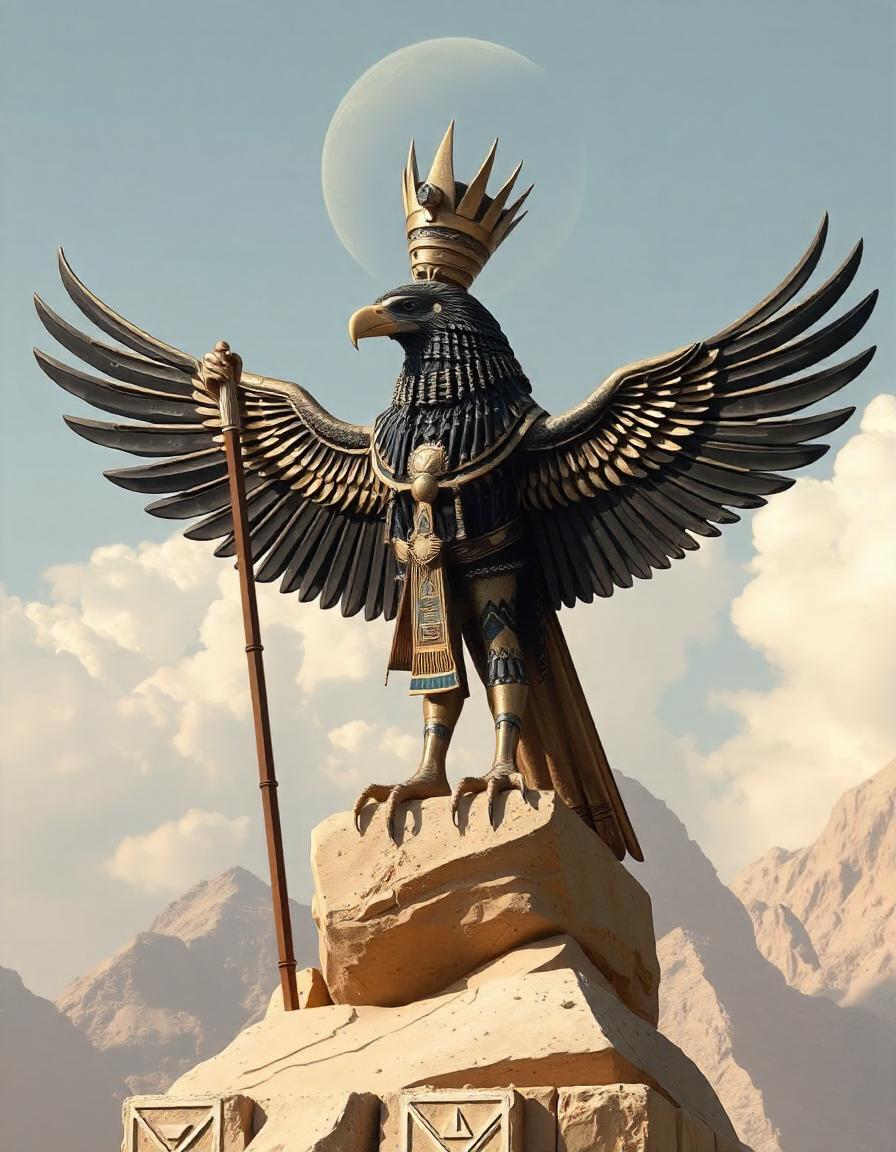
Nekhbet Nekhbet is among the oldest Goddesses of Egypt and addressed as the “mother of all mothers” as she has existed from the start with the origin of time. She is also known to be the Goddess of vultures. Vultures are considered as protectors and also have a connection when one talks of dead people. Nekhbet was a protector of the pharaoh and his queen and children. Nekhbet is often pictured as a woman with a vulture’s head, wearing a white crown and with her wings spread over the king. She is also considered as the mythical mother of the pharaoh. Nekhbet is also the patron goddess of Upper Egypt which she adopted. Her sister Wadjet, assumed the form of a cobra and was the goddess of Lower Egypt. Together both Nekhbet and Wadjet ruled the entire Egypt and their union was referred as “Two Ladies”. Nekhbet is represented as the white scavenger vulture as she is believed to prey on the dead and dying. Like many Egyptian Gods and Goddesses, Nekhbet also had a darker side to her personality. She was called the “Eye of the Ra” as she used to spread her wings over the pharaoh during war and protect him by scaring his enemies. There is another myth which talks of Nekhbet protecting Osiris during his birth. Due to this myth, she is also worshipped by pregnant women to protect their children and is associated with fertility. As Nekhbet was called the protector of the pharaohs, their queens were considered as Nekhbet’s incarnations and were supposed to wear crowns and headdresses that were linked to her image. Egyptian Mythology Amun-Ra Egyptian Mythology Nekhbet Egyptian Mythology Bes Egyptian Mythology Nephthys Egyptian Mythology Sobek Egyptian Mythology Khonsu Egyptian Mythology Osiris Egyptian Mythology Thoth Egyptian Mythology Seth Egyptian Mythology Isis Egyptian Mythology Geb & Nut Egyptian Mythology Bastet Egyptian Mythology Anubis Egyptian Mythology Horus Egyptian Mythology Sekhmet Previous Next
Bes
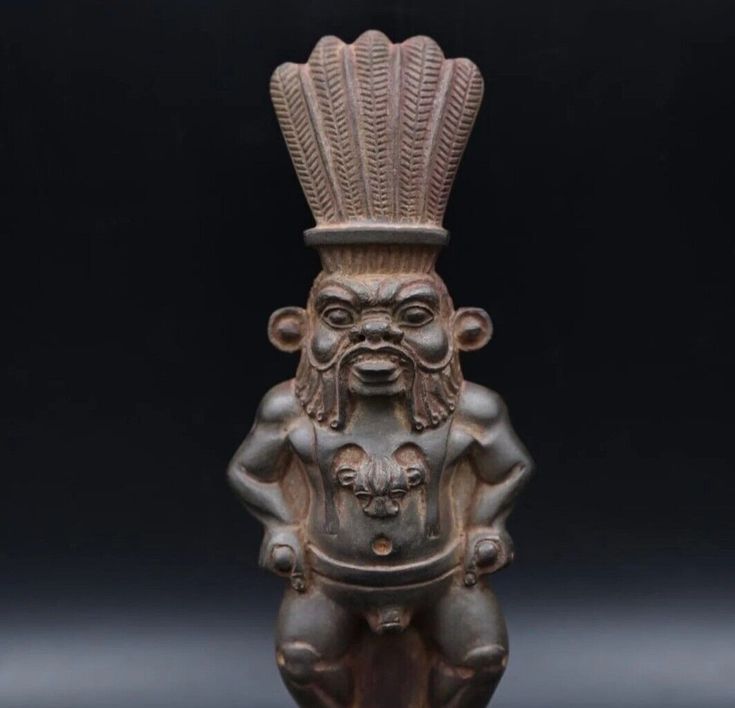
Bes Bes is the God of dwarves as well as the protector of households, especially mothers and children. One of the ugliest and most popular gods in Ancient Egypt, Bes had the power to scare off evil spirits. He often appeared on amulets and in sculptures as a hairy little man with a lion-like bearded mane, a pug nose, a protruding tongue and bow shaped legs. He wears a tiara made of bird feathers and his clothes are made from the skin of the panther. Egyptians believed that dwarves (and other people who were born different) were inherently magical and so Bes was considered extremely good luck. He had superhuman powers and hence watched over people who needed protection from evil and hence people would invoke his presence for their safety. Alongwith his wife Beset, the couple was worshiped for child birth by women. People placed the statue of Bes in their rooms or over their bed to protect them and prevent bad dreams. Everyone in Egypt believed that honouring Bes would bring luck, prosperity and health. Bes is also depicted as a deity in dancing or laughing or singing form and was said to be entertaining kids invisibly. So when a child was seen smiling or laughing alone, people thought that they were enjoying with Bes. Bes has a complex side to his personality as he is considered as a deity as well as a demonic spirit and has no temple in his name. But despite this dark side, Bes was always considered as responsible protector of families. He was believed to keep families and especially children free from evil spirits possessing their bodies, he would kill poisonous snakes and also help women when they were in labour by guarding their delivery and birth process. His name origin also has a linkage to cat who is also popular in human households and hence some mythological texts also depict him as a feline God. Egyptian Mythology Amun-Ra Egyptian Mythology Nekhbet Egyptian Mythology Bes Egyptian Mythology Nephthys Egyptian Mythology Sobek Egyptian Mythology Khonsu Egyptian Mythology Osiris Egyptian Mythology Thoth Egyptian Mythology Seth Egyptian Mythology Isis Egyptian Mythology Geb & Nut Egyptian Mythology Bastet Egyptian Mythology Anubis Egyptian Mythology Horus Egyptian Mythology Sekhmet Previous Next
Nephthys
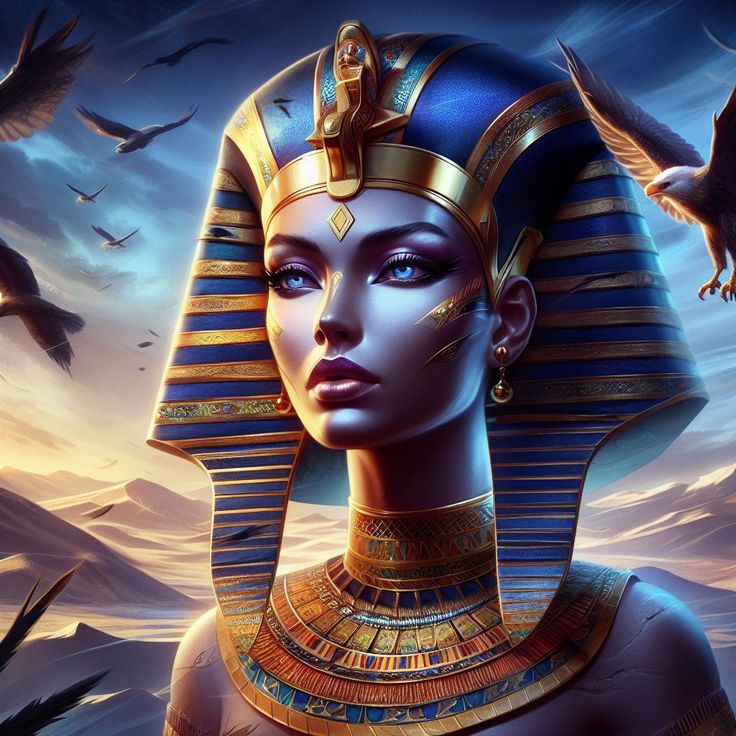
Nephthys Nephthys is the Egyptian Goddess of rivers. She is the youngest child of Geb who represents the Earth and Nut who represents the Sky. She is the sister-wife of Seth and the sister of Isis. Nephthys and Isis look similar and are considered as twin sisters who can be differentiated by their head-dresses. They are also seen in tombs as they were both present at the mummification of Osiris. Nephthys wears typical Egyptian clothes, generally red or light blue robes engraved in silver designs and has a crown or tiara. Her magical staff which has an Egyptian shabti is symbolised for good luck. She was a kind and gentle goddess, and is the mother of Anubis, the god of funeral rites. Her wings are believed to be the symbolic representation of the shelter that she provides to the dead souls when they are roaming in the afterlife and hence people link her as the bridge between the air and the heaven. Nephthys is worshipped as she is believed to guard the hearts of the dead souls along with the God Hapi who protects the lungs of the dead souls. It was believed that if the heart and lungs were in good condition, the dead souls would get additional time to find heaven and hence Nephthys was considered a very important Goddess. Nephthys also had a mastery on spells and magic. Mythology says that Nephthys didn’t like her husband Seth very much and had got smitten by Osiris. Hence, she used magic and disguised herself as Isis and enjoyed some moments of love with Osiris. She also conceived the jackle-headed God Anubis after her union with Osiris. The other myth around Anubis, states that when Nephthys realised that she had made a mistake of adultery by giving birth to Anubis, to save herself from Seth’s wrath, she abandoned Anubis and left him to die. Fortunately Isis found him and adopted him despite knowing that he was the child of Osiris and Nephthys. This angered Seth who was anyways jealous of Osiris and created misunderstanding between Osiris and Seth due to which Osiris got killed by Seth. Nephthys then helped Isis search the body parts of Osiris’ and collect his body pieces and bind them together to restore his life. Egyptian Mythology Amun-Ra Egyptian Mythology Nekhbet Egyptian Mythology Bes Egyptian Mythology Nephthys Egyptian Mythology Sobek Egyptian Mythology Khonsu Egyptian Mythology Osiris Egyptian Mythology Thoth Egyptian Mythology Seth Egyptian Mythology Isis Egyptian Mythology Geb & Nut Egyptian Mythology Bastet Egyptian Mythology Anubis Egyptian Mythology Horus Egyptian Mythology Sekhmet Previous Next
Sobek
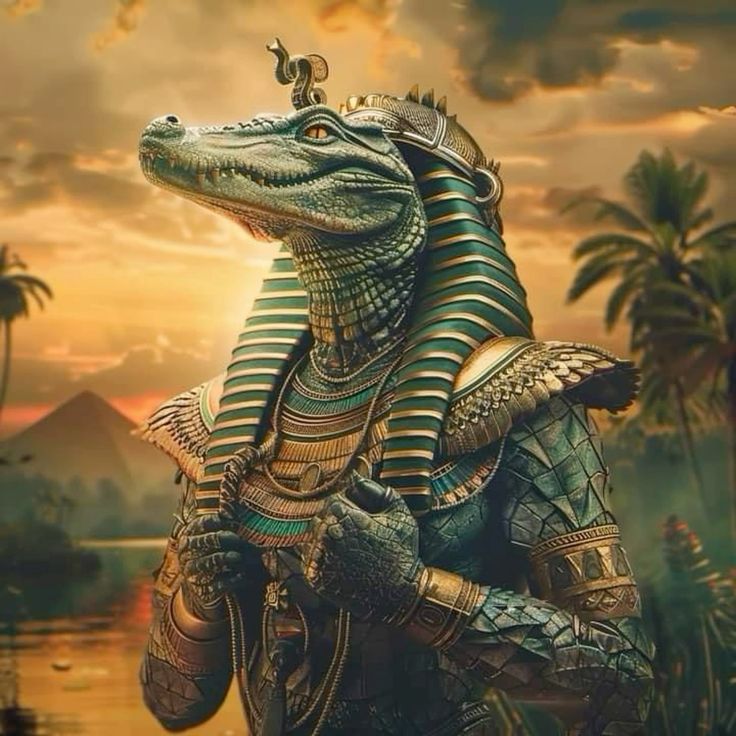
Sobek Sobek is known as the leader of crocodiles. He is the one who is believed to have risen from the dark waters which are the old waters of Nun Goddess and hence he control the waters and brings fertility to the fields. Sobek is called the father of the river Nile as it is believed that Nile was created from his sweat. This is how he is said to be the one who gave the world its order by giving birth to Nile. Some myths also associate Sobek with creating the world by laying eggs on the banks of the Nile. Sobek is mostly pictured as a ferocious crocodile-headed man who wears a crown set of ram horn with a serpent and a sun disk and adorned with ostrich feathers. He also carries with him a water lily which symbolises rebirth. Sobek’s mother is a war like goddess called Neith but there are three myths around who his father could be. Some believe Seth was his father and other believers worship him as the son of Khnum, the potter’s wheel God. The famous myth associates him as the son of Horus, the falcon headed God. It is said that Horus fertilized an egg with a crocodile’s help and gave birth to Sobek. Sobek’s wife was a snake Goddess by the name Renenutet and she protected the pharaohs’ crops. Their son was Khonsu, who was worshipped as a time and moon god. Egyptians worshipped Sobek before they travelled on their boats in water and mummified crocodiles to seek his blessings. In the temples dedicated to Sobek, live crocodiles were kept in pools to honour him. Egyptians also thought that if they worshipped Sobek, they would have a great harvest. Hence many Egyptian tombs have mummified crocodiles for good luck to the surviving family members. While Sobek had a violent side to his personality, he wasn’t evil. Sobek is also believed to be his father, Seth’s trusted companion when he went to war with Horus. Unfortunately Seth was defeated. That’s when Sobek got his army to transform themselves into crocodiles and escape Horus. Egyptian Mythology Amun-Ra Egyptian Mythology Nekhbet Egyptian Mythology Bes Egyptian Mythology Nephthys Egyptian Mythology Sobek Egyptian Mythology Khonsu Egyptian Mythology Osiris Egyptian Mythology Thoth Egyptian Mythology Seth Egyptian Mythology Isis Egyptian Mythology Geb & Nut Egyptian Mythology Bastet Egyptian Mythology Anubis Egyptian Mythology Horus Egyptian Mythology Sekhmet Previous Next
Khonsu
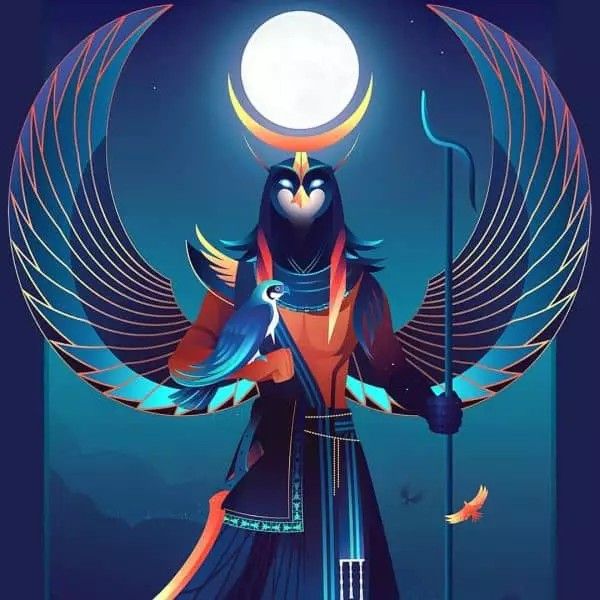
Khonsu According to Egyptian beliefs, Khonsu, the moon God, was the child of Ra. Khonsu was usually depicted as a young man in a pose like a mummy, and his uniqueness is his necklace with a crescent shaped piece and his side lock or a long braid of hair on the side of his head, which was symbolic of youth. As a lunar deity, Khonsu was the embodiment of the crescent moon’s light. It was in the later times, that Khonsu came to be regarded as very powerful and was looked as the protector of the pharaohs and also to ward off the evil spirits in the world. Egyptian Mythology Amun-Ra Egyptian Mythology Nekhbet Egyptian Mythology Bes Egyptian Mythology Nephthys Egyptian Mythology Sobek Egyptian Mythology Khonsu Egyptian Mythology Osiris Egyptian Mythology Thoth Egyptian Mythology Seth Egyptian Mythology Isis Egyptian Mythology Geb & Nut Egyptian Mythology Bastet Egyptian Mythology Anubis Egyptian Mythology Horus Egyptian Mythology Sekhmet Previous Next
Osiris
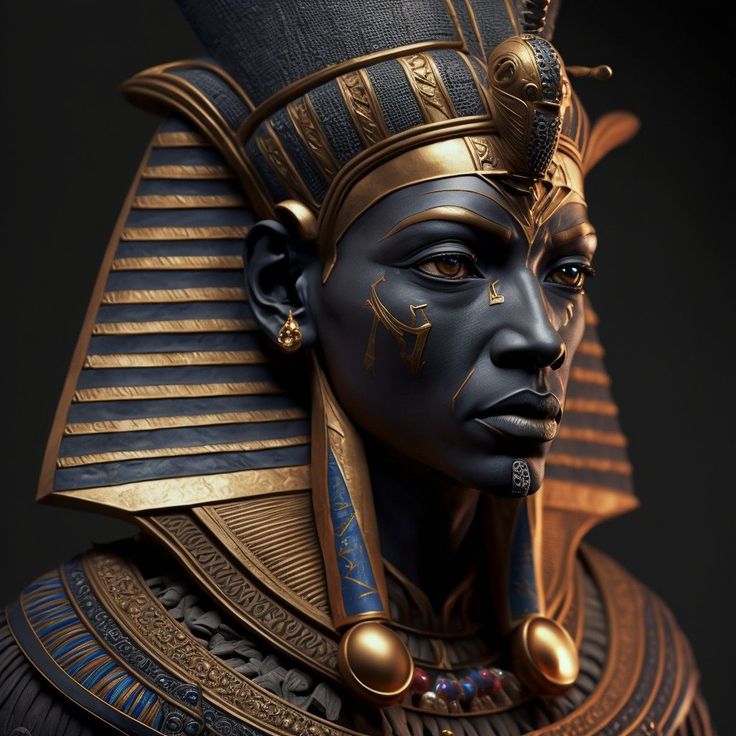
Osiris Osiris is the Egyptian God of the Underworld and the Judge of the Dead. Osiris is often depicted with black or green skin symbolizing the fertile mud of the Nile and regeneration. He is also shown as a mummy or in partially mummified form in his role as Judge of the Dead. In his human depiction form, he is shown as a tall and handsome God with black hair. Ostrich is the animal associated with Osiris as he is known for his justice value. The Egyptians believe that when someone dies, their soul gets judged by Osiris and his panel of 42 judges. Osiris is the brother as well as husband to Isis, and one of the most important Gods of Ancient Egypt. Horus is their son. Osiris is believed to be born shortly after the creation of the world. He is the first-born child of the Gods Geb and Nut and hence was selected as the first Pharaoh of Egypt. Geb is worshipped as the God of the Earth and Nut is worshipped as the Goddess of the Sky. During the rule of Osiris and Iris, the Egyptian people had bountiful harvests and hence they were most loved. Osiris was murdered by his younger brother Seth who is the God of chaos because Seth was jealous of Osiris’ power and the fact that he became the first pharaoh. He also was envious of Osiris’ good looks. When Osiris had gone outside his kingdom to spread the knowledge of farming and music among mortals, Seth plotted against him and convinced many to help him to kill Osiris. When Osiris returned after completing his work, Seth laid a grand feast for his brother’s return and is said to have tricked Osiris. After the feast, Seth brought a lovely casket and tricked Osiris to get inside. This was actually a coffin. As soon as Osiris got inside, he immediately locked it and threw it in the river Nile. The coffin was swept by the river and eventually parked at a place where a tree grew on it. This then trapped Osiris inside the coffin and resulted in his death. Isis who was Osiris’ sister-wife saved him and brought him back to life with magic. But Seth killed him again and scattered fourteen pieces of Osiris’ body all over the world so that Isis could not bring him back to life again. Isis still used all her magic and located all the thirteen body parts, and she could not locate the last one. That’s when because Osiris was neither fully alive nor fully dead, he stayed in the underworld and also got the title of the God of Afterlife. Osiris can bring back the dead to life if he wishes and can grow vegetation from the underworld Egyptian Mythology Amun-Ra Egyptian Mythology Nekhbet Egyptian Mythology Bes Egyptian Mythology Nephthys Egyptian Mythology Sobek Egyptian Mythology Khonsu Egyptian Mythology Osiris Egyptian Mythology Thoth Egyptian Mythology Seth Egyptian Mythology Isis Egyptian Mythology Geb & Nut Egyptian Mythology Bastet Egyptian Mythology Anubis Egyptian Mythology Horus Egyptian Mythology Sekhmet Previous Next
Thoth
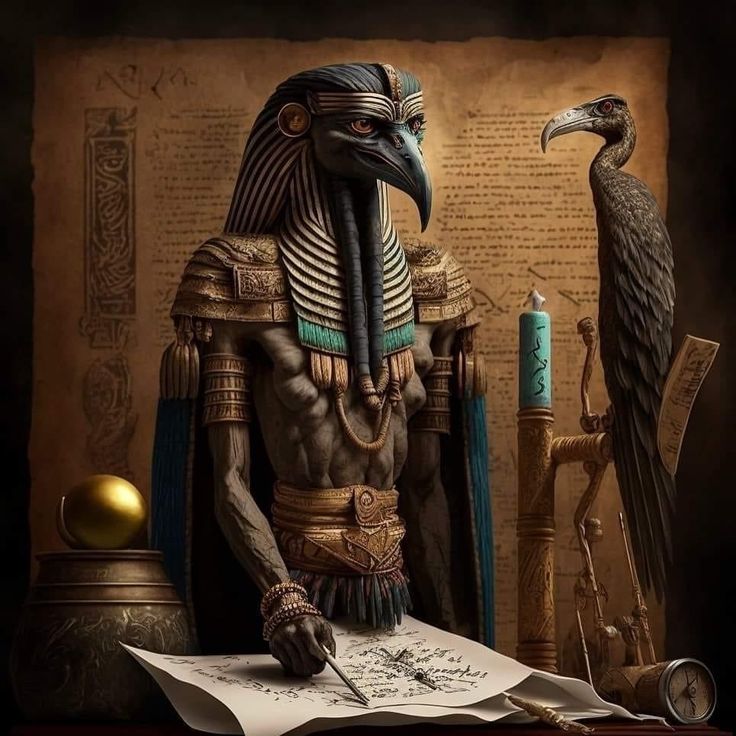
Thoth Thoth is the ancient Egyptian God of writing and wisdom. He is portrayed as a human with the head of an ibis and a lunar disc above his head. He is shown to hold a palette and stylus or at times a reed pen and a papyrus scroll, which are the main symbols of the scribes of Egypt. They would pour a drop of ink in Thoth’s honor before they began the daily writing. The roles of Thoth include the development of science, the judgement of the dead and the system of writing. Hence, he is most popularly worshipped by the Pharaohs, scribes and priest of Egypt. He is the secretary or messenger of Ra and is also known as the scribe of the Gods and is known to record all the events of the Universe. Legend says that Thoth was self-created from the seed of Horus and the forehead of Seth. There is another myth which again believes that Thoth was self-created and was born from the lips of Amun- Ra when he was creating the Universe and hence he does not have any mother. There are myths about Thoth’s role in the afterlife, where he would weigh the hearts of the dead against the feather of Ma’at, who is the Goddess of justice. If the Ma’at was lighter than the heart, the person could enter the afterlife, else the dead person would be devoured by Ammit, the killer of the dead. Thoth was the reason Isis could bring back Osiris back to life as he helped her with the power words which restored Osiris’ life. Because of the revival of Osiris life, Isis and Osiris could give birth to Horus who then avenged the death of his father and killed Seth. When Horus was born, it was Thoth who suggested to Isis to keep Horus in hiding and bring him out only after he was strong enough to fight Seth. During Horus’ childhood, he was once bitten by a scorpion. Despite all magic and spells, Isis could not cure Horus. Thot came to the aid and recited a long spell which helped recover Horus to his full health. Even in the battle between Horus and Seth, Thoth helped Horus with guidance on how to win. Egyptian Mythology Amun-Ra Egyptian Mythology Nekhbet Egyptian Mythology Bes Egyptian Mythology Nephthys Egyptian Mythology Sobek Egyptian Mythology Khonsu Egyptian Mythology Osiris Egyptian Mythology Thoth Egyptian Mythology Seth Egyptian Mythology Isis Egyptian Mythology Geb & Nut Egyptian Mythology Bastet Egyptian Mythology Anubis Egyptian Mythology Horus Egyptian Mythology Sekhmet Previous Next
Seth
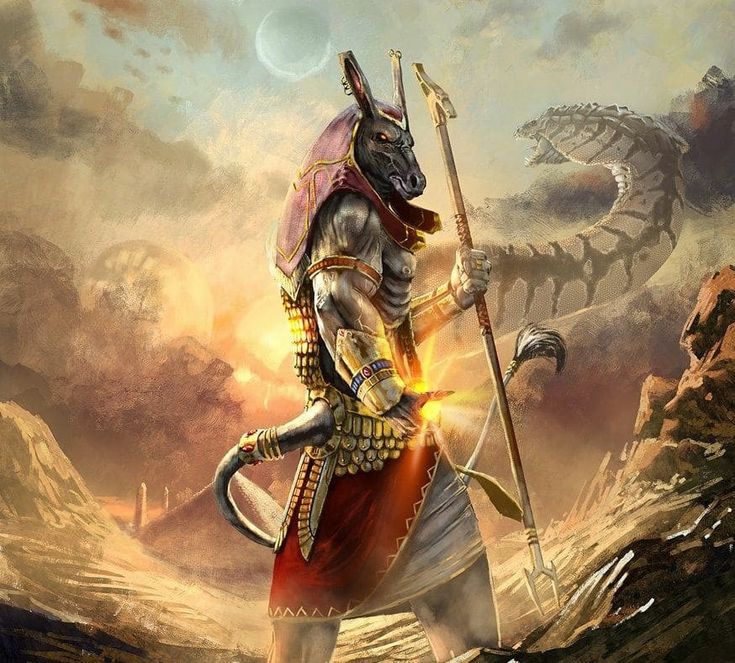
Seth Seth is one of the most misunderstood Gods in Egyptian Mythology. He is the God of violence, chaos, storms and deserts and is usually blamed when things go wrong. According to some myths, unlike his other brothers and sisters, Seth was born by tearing himself out of his mother’s womb, which symbolises violence. His name is usually translated into “instigator of confusion”. He is generally compared with Loki from the Norse mythology and with Hermes from the Greek mythology as all these three Gods are known to be mischievous. Seth has a unique cult of followers who do not believe that he is evil. Seth is often associated with the colour red which represents evil in Egypt. The Egyptians showed Seth as a man with the head of an animal who had a pointed snout, tall, rectangular ears and a thin body like a dog with a long, forked tail that splits into two parts. He is usually seen holding an ankh and a scepter which signifies authority. He is the brother of Osiris and Isis, and uncle to Horus, and brother-husband to Nephthys. Seth’s relation with Osiris, his elder brother is the most famous myth when one talks about Seth. As Osiris was the first born, he was selected as the natural ruler of Egypt. Under Osiris’s rule, Egypt and its people prospered. This made Seth jealous. Earlier, Seth was the God of love, but this jealousy towards his brother turned him from a hero to a villain. In a coup, Seth murdered Osiris and dismembered his body parts to become the ruler of Egypt. He even scattered Osiris’s body parts all over the world so that no one could resurrect Osiris. Seth was feared due to this chaos and destruction that he caused. Isis eventually resurrected Osiris with magic and made him the God of Afterlife. Eventually Seth was beaten and defeated by Osiris’s son, Horus in a combat. While Seth is known for his complex nature, he is also the God who is responsible for maintaining the balance and order. There is another legend which talks about how Seth is the protector of the Sun God Ra against Apophis who is the evil serpent. It is believed that every night, Seth defends Ra against Apophis and ensures his safe passage to the other side thus helping in the cycle of day and night and the continuation of cosmic order. Egyptian Mythology Amun-Ra Egyptian Mythology Nekhbet Egyptian Mythology Bes Egyptian Mythology Nephthys Egyptian Mythology Sobek Egyptian Mythology Khonsu Egyptian Mythology Osiris Egyptian Mythology Thoth Egyptian Mythology Seth Egyptian Mythology Isis Egyptian Mythology Geb & Nut Egyptian Mythology Bastet Egyptian Mythology Anubis Egyptian Mythology Horus Egyptian Mythology Sekhmet Previous Next
Isis
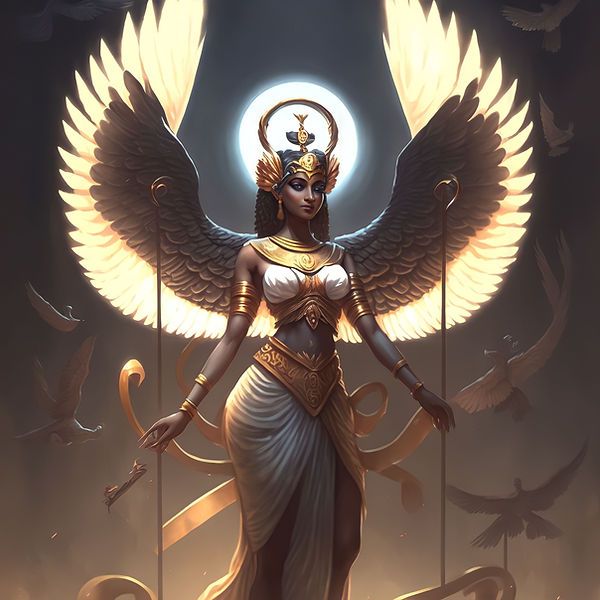
Isis According to Egyptian mythology, Isis is the Egyptian Goddess of magic and motherhood. She is one of the greatest Goddesses in the Egyptian pantheon. She is known to protect women and children and is the healer of the sick. When her husband Osiris ruled Egypt, Isis also contributed her bit by teaching women how to weave, bake bread and brew drinks. Isis is represented as a beautiful woman wearing a sheath dress & either the hieroglyphic sign of the throne or a solar disk and a cow’s horns on her head. Her parents are Geb and Nut, while her siblings are Osiris, Nephthys and Set. Isis is Osiris’s wife and Horus’s mother. With her magical powers, she once cast a spell even on Amun-Ra and made him reveal his secret name. She then used this secret name to overthrow Amun-Ra and put Osiris on the throne. The famous story behind this goes to the times when Isis collected the God Ra’s spit, without his knowledge and built a powerful snake from this spit. She placed the snake on the route of the walking path of Ra and when Ra crossed that path, the venomous snake bit him. Given that the snake was magically created, there was no cure apart from the cure that Isis was aware of. The poison was rapidly spreading in Ra’s body and that is when Isis told Ra that he needs to tell her his secret name. Ra’s secret name gave him unlimited power so he was caught as he never told anyone his secret name. Eventually as the poison was spreading faster all over his body and was causing uncontrollable pain, he gave in and whispered his secret name to Isis and got cured with Isis and her healing magic. Using this new power of the secret name, Isis dethroned Ra and made Osiris the new king. There is another famous myth which talks of the time when the jealous Seth killed his brother, Osiris. Isis is said to have used her magical powers and bring him back to life with her spells. Earlier, Isis did not have many dedicated temples of her own, but as people started realizing her powers, her worshippers increased. Egyptian Mythology Amun-Ra Egyptian Mythology Nekhbet Egyptian Mythology Bes Egyptian Mythology Nephthys Egyptian Mythology Sobek Egyptian Mythology Khonsu Egyptian Mythology Osiris Egyptian Mythology Thoth Egyptian Mythology Seth Egyptian Mythology Isis Egyptian Mythology Geb & Nut Egyptian Mythology Bastet Egyptian Mythology Anubis Egyptian Mythology Horus Egyptian Mythology Sekhmet Previous Next